English
TIFF 23 – Indian Cinema is on a Mission to KILL
Kill is destined to become an action favourite amongst fans of the genre, alongside recent high violence movies such as The Raid 1 & 2 and The Night Comes For Us.
 Film Exposure
Site consacré au cinéma proposant des articles de fond et documentés.
Kill is destined to become an action favourite amongst fans of the genre, alongside recent high violence movies such as The Raid 1 & 2 and The Night Comes For Us.
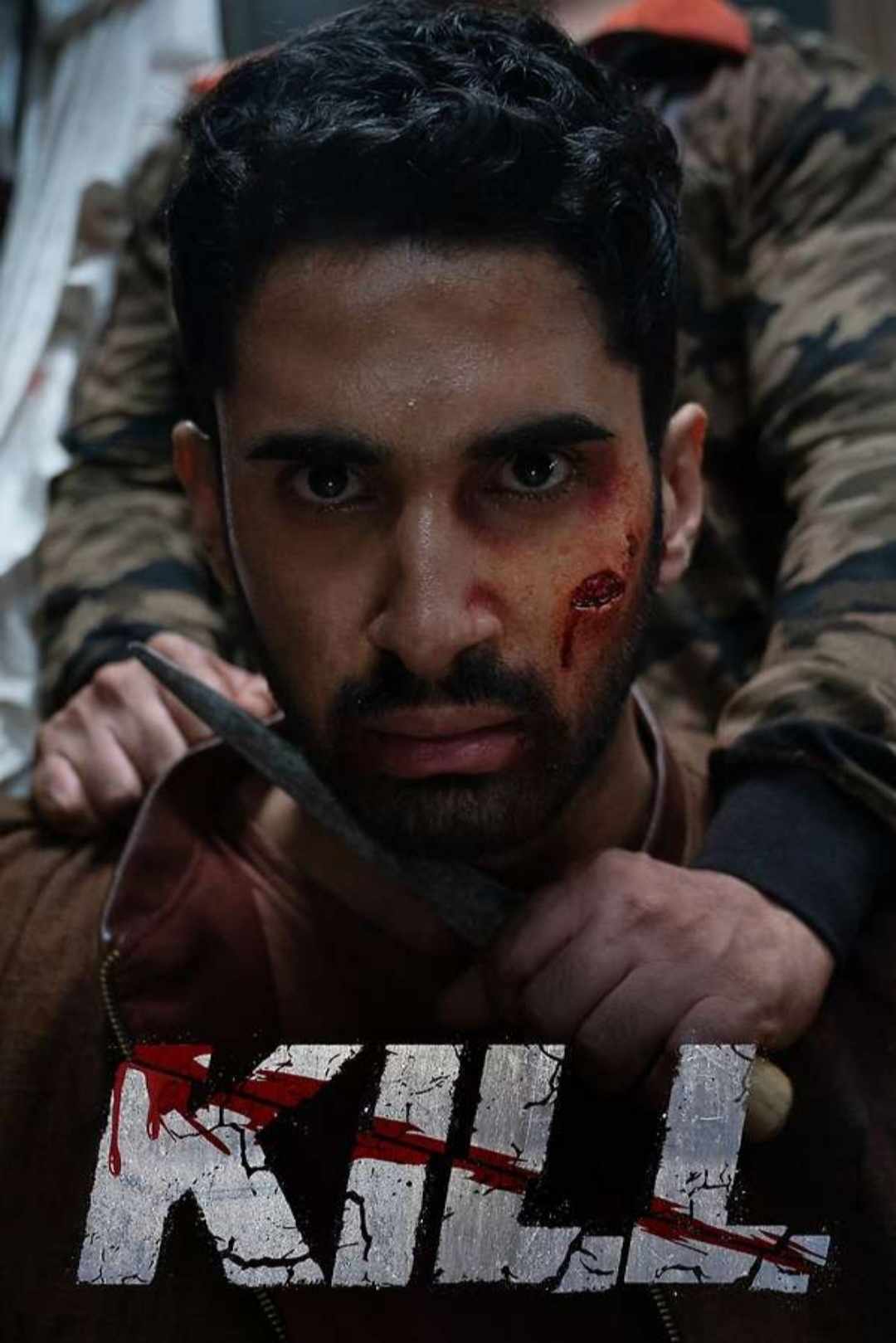 Every few years, for nearly two decades now, the world of cinema gives birth to a new ultra-violent action movie. Indian films have been doing action for a century, and yet, you’ve never seen an Indian actioner like Nikhil Bhat’s Kill. Forget the slo-mos and the speed ramps, forget the deification of the on-screen icon, forget the songs and dance, forget the outbursts of joy in the audience when the hero first appears. Think blood, close-quarters combat, and quick, gruesome kills.
It would be difficult and futile to paraphrase the official synopsis from TIFF, where the film had its world premiere, so here goes: “Star-crossed lovers Tulika and Amrit find their clandestine relationship jeopardized after Tulika’s family whisks her aboard the Rajdhani Express bound for both New Delhi and an arranged marriage. Not willing to sit idly by, Amrit and his fellow commando buddy Viresh embark on a romantic “rescue” mission. But when the train is suddenly stormed by a gang of blade-wielding bandits, the stakes are considerably raised, and the two friends must rely on their martial arts prowess to dispatch the thieves and save the passengers.”
Lots of things could have gone wrong during the making of this film. Fortunately, lots of good decisions were made. When director Nikhil Nagesh Bhat mentioned his idea for an action film inspired by The Raid to his producer, both were ecstatic about the idea of bringing this kind of action to India. They hired the services of Korean fight choreographer Oh Se-yeong, whose experience on the film Snowpiercer undoubtedly proved invaluable. He worked closely with veteran action designer Parvez Shaikh, who notably worked on the successful Bollywood blockbuster War. Then, they needed to find a new face for their protagonist. Hiring a well-known actor could have backfired, creating expectations from their fans. The filmmakers needed a clean slate. That’s where Lakshya Lalwani comes in. With his martial arts background, the young, fresh actor (the two previous films he was in have yet to be released) is immediately convincing as this highly trained combat machine torn between his duty as a soldier and his desire to protect innocents.
The film wastes no time setting things up. It could have — in fact, it nearly did, as a previous cut of the film took much longer to embark on the train. By cutting the initial set-up to around 10-15 minutes, the film quickly starts benefitting from the propulsive kinetic energy that emanates from the fights. Limited by the restricted space of the train coaches, the movements have to remain practical and efficient. No space to show off, no time to waste. Blades pierce the air left, right and centre, heads meet walls and metal bars at every corner. The possibility of death and danger feels real from the get-go and never fades, in no small part due to Lakshya’s willingness to repeatedly appear beaten and wounded on screen.
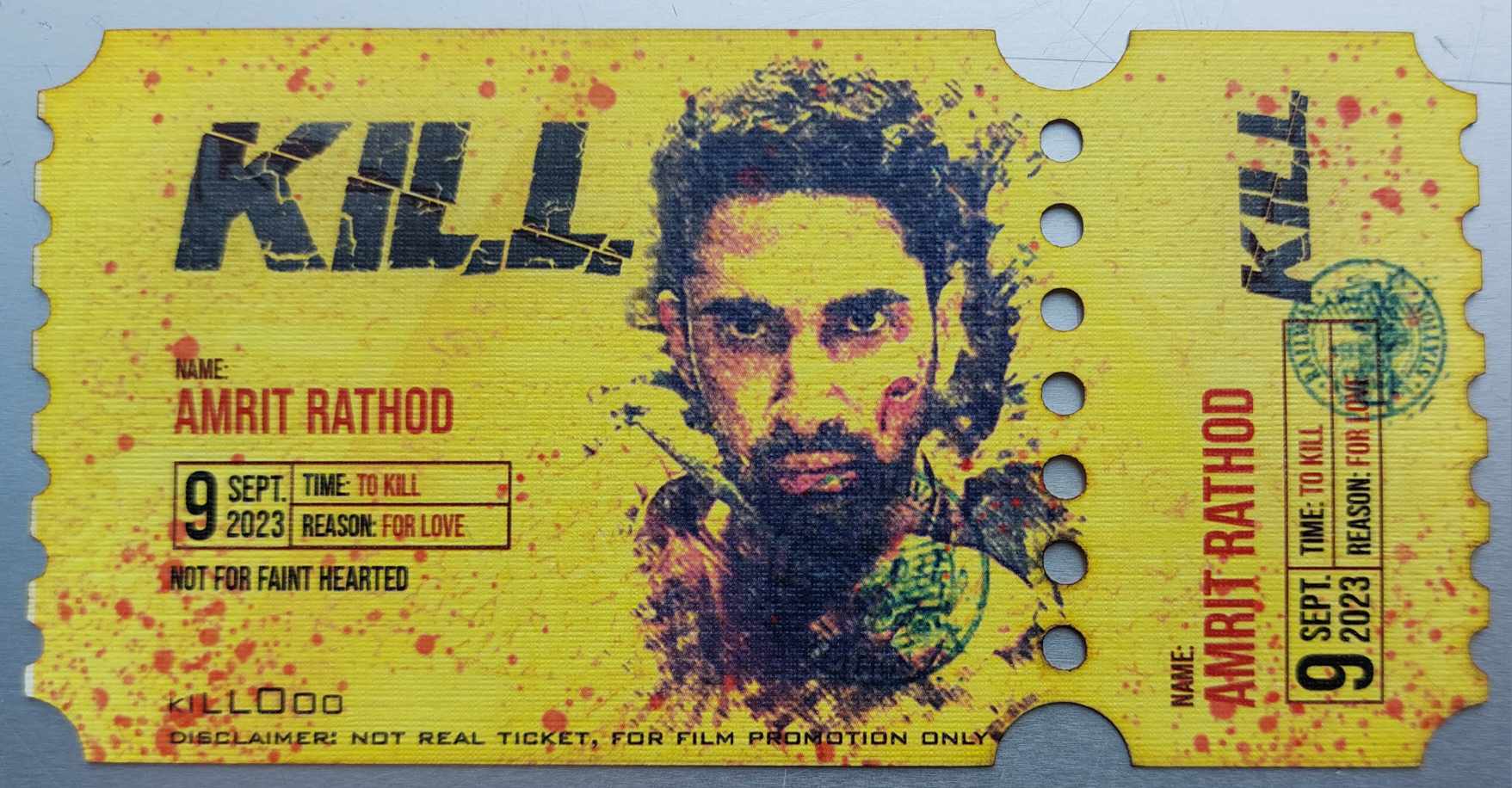
While some violence films of the same vein can eventually feel repetitive or low-stakes, Kill keeps its momentum with a balanced used of its romance elements, making them resurface to renew motivations and emotional involvement, therefore grounding the action in a palpable reality. Amid all the carnage and the blood, the main questions occupying the viewer’s mind firmly remain “Will he make it? Will he save them?”, never becoming a stunts showcase detached from its emotional truth.
While the geography of the fights is never an issue, it is not always clear where on the train some characters are in relation to other groups. Are they on a coach closer to the front, or to the back? Smartly, the action unfolds mainly over a handful of coaches, with the script choosing to leave the rest of the long overnight train (and its roof) blood free, avoiding the pitfall of turning the movie into a disaster film. Perhaps clearer visual signifiers could have helped, but it is a minor quibble.
This is a spoiler-free review, but one thing that needs to be said is that an emotional shift happens at some stage in the film, which prompts the combat style to also evolve for the gorier. Before that, the film treads entertaining but familiar paths. After that, it becomes a complete anomaly of unrestrained brutality in Indian cinema. Director Nikhil Bhat utilises the confined space of the set judiciously, multiplying camera angles for clarity and dynamism, but completely eschews formal mannerisms usually associated with Hindi action films. Clarity and speed take center stage here, as each split-second decision becomes a matter of life and death.
There are scenes that briefly turn main character Amrit Rathod into an avatar of the horror genre, framing his silhouette menacingly against the light and within a door frame. Another makes use of dead bodies as horror signifiers of extreme violence, triggering complete emotional breakdowns among the bandits.
Speaking of which, the figure of the bandit, or “dacoit”, is a recurring one in Indian cinema, seen in all kinds of films, from national cultural events like Sholay (1975), to more regional action productions such as Captain Prabhakaran (1991). Bhat, however, decides to turn the bandit group into a massive extended family, all its members being more or less closely related. This brings about questions of class, of course, as the film seems to suggest the dacoit gang might come from a more modest background than the protagonist and mainly his love interest, who belongs to an upper caste (or at least financially comfortable) family. The movie makes every effort not to delve into those questions, trying to remain firmly in entertainment territory, but they arise anyway.
Nikhil Nagegh Bhat tackled questions of caste in his previous film Hurdang, a romance set against the backdrop of the 1990 upper caste student protests about the introduction of minimum quotas for pupils from less privileged backgrounds. It’s not easy grasping all the ramifications of such a story as a non-Indian, but the class clash seems to be continuing to some extent in Kill. His first film Brij Mohan Amar Rahe was a low-budget indie dark comedy about a man who fakes his death and ends up being accused of his own murder. The jump in quality between his debut and his sophomore feature was already impressive, but the level-up between Hurdang and Kill is nothing short of phenomenal.
Other Bollywood action movies have tried to move away from the idol-star iconisation to some degree, incorporating Korean-style knife fighting (Iddaramayilatho, Rocky Handsome), introducing Hong Kong-style rhythms or patterns (Commando trilogy, Sanak), or simply trying to go for a leaner visual vocabulary (just this year for instance, the disappointing Michael and Bloody Daddy). But none have ever done it to the degree and intensity of Kill.
Kill is destined to become an action favourite amongst fans of the genre, alongside recent high violence movies such as The Raid 1 & 2 and The Night Comes For Us. Hard-hitting hand to hand combat and bladed group fights reign supreme, occasionally interrupted by scenes of gory bodily destruction. Its compact format, its easily defined characters, and its high impact action will ensure its place in the select club of actioners fans will be consistently recommending to everyone they talk to for years and years.
India has a rich history of action films, from the stunt silents of the Wadia brothers to female star of the silent era Fearless Nadia, to the distinguished swashbuckling of Master Vithal, to the wrestling films of Dara Singh, all the way to the present hero-worship imagery of masala entertainers. Will Kill usher in a new era? I hope they name the sequel “Overkill”.
Kill – No release date yet
Directed by Nikhil Nagesh Bhat
With Lakshya Lalwani, Tanya Maniktala, Raghav Juyal

 Film Exposure
1 commentaire »