English
FF 2023 – One Percenter: A New Flow of Action
One Percenter is a panegyric of “flow” fighting, TAK-realism, and self-seriousness. If you’re on the same wavelength, it’s just as intense as you’d expect.
 Film Exposure
Site consacré au cinéma proposant des articles de fond et documentés.
One Percenter is a panegyric of “flow” fighting, TAK-realism, and self-seriousness. If you’re on the same wavelength, it’s just as intense as you’d expect.
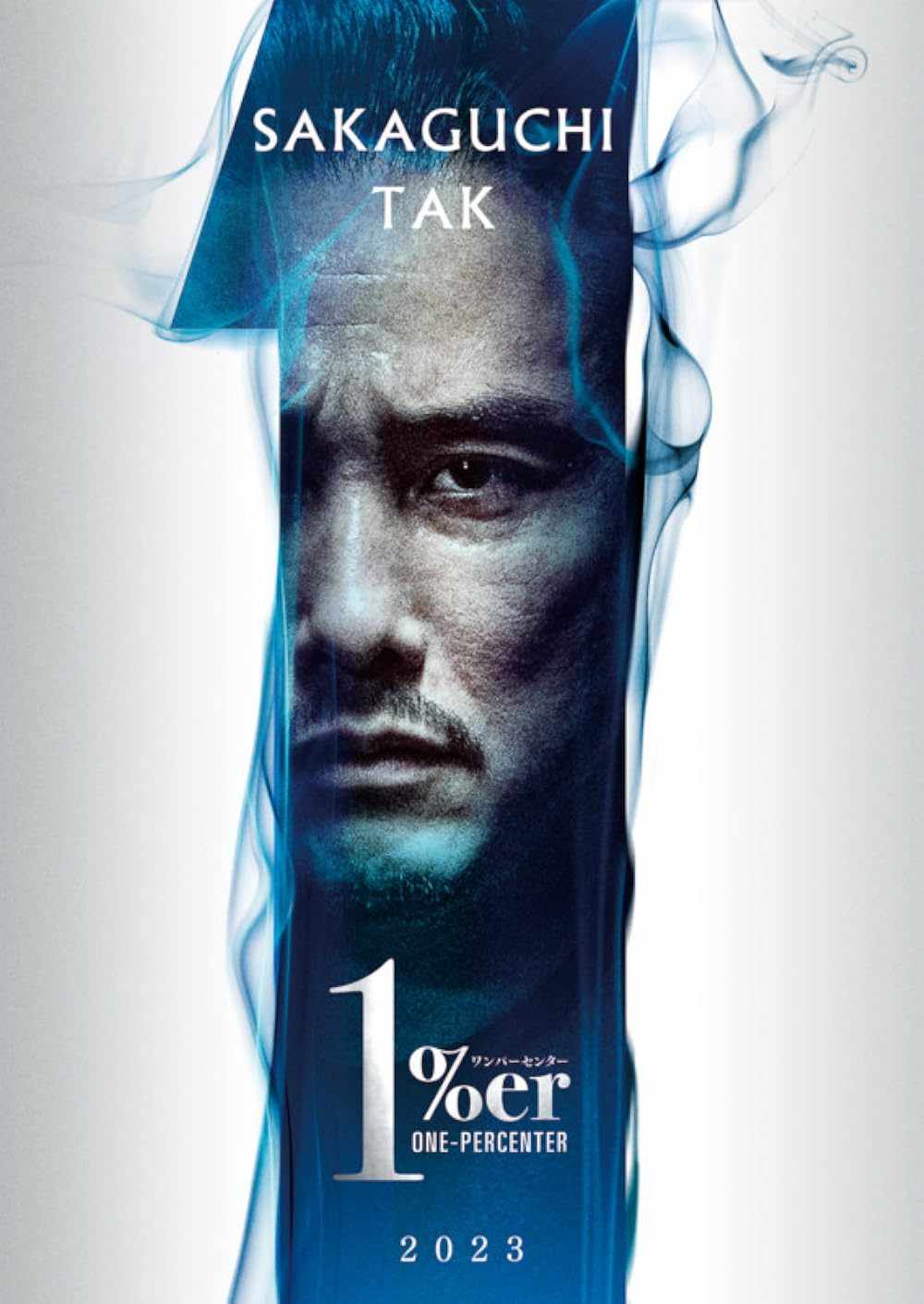 Independent Japanese genre cinema has never been so alive. After the lull of the mid-2000s/early 2010s, the industry has picked up, with the influx of a new generation of stars and artists who are on an ever-lasting quest to always find something new, something fresh, something unique in their way to craft action films. Actor Tak Sakaguchi has been in the industry for a while, but he rose to prominence in 2016 with RE:BORN directed by Yuji Shimomura, in which TAK (as he is commonly called) unleashed a novel vision of on-screen martial arts on the world, one that argued for flowing movements, wave-like techniques, and a more tactile, corporeal approach to action choreography. Seven years later, TAK is back in the lead role of a new action film… of the ultimate action film designed to end them all.
Takuma Toshiro is an action actor who believes in making “real action movies”, but who has been pushed to the fringes of the industry. After making a successful cult film over a decade ago, his career has stalled, as he finds himself relegated to stuntman roles and bit parts in big blockbusters he tends to look down upon. But Toshiro risks everything when he convinces an independent investor to finance his new ultra low-budget film. A man on a mission, Toshiro takes his assistant Akira with him and goes location scouting on an abandoned, isolated industrial island. But things go off rails when a band of Yakuza looking for a hidden treasure (it’s cocaine) invade the island, threatening to kill their hostage. Can “real action actor” Takuma Toshiro really stop the criminals?
In a way, One Percenter is the ultimate TAK film. It’s a film about the form of action cinema, the way it’s executed and filmed, and the reverence it should be given by all involved, audience included. The script draws some interesting metatextual parallels between TAK’s own career and that of his character, to the point one can legitimately ask themselves if the actor was looking to create a partly autobiographical work in which he would be able to express all his frustrations (at the investors, at the market, at the blockbuster quasi-monopoly), as well as give life to what he personally thinks action should look like on screen. This is something to keep in mind while watching 1%er: while directed by Yudai Yamaguchi (Meatball Machine, Yakuza Weapon, etc.), this is TAK’s film through and through, the director’s usual style never shining through here, in favour of a more intimate and serviceable camera that focuses on the bodies, their movements, their falls, their shapes. The handheld cinematography remains perfectly legible at all times, occasionally offering longer immersive takes.

The actor can however count on the support of legendary action choreographer Kensuke Sonomura, who we often sing the praises of on this very website. Sonomura has the particular ability to switch freely and effortlessly between styles and tones, as proved by his long career (watch Bushido Man for a excellent sample of his versatility), and his work on One Percenter is nothing short of exceptional, propelling the film to the top choreographed actioners of the year. The two men thus endeavour to propose a treaty on the “wave” combat system, TAK’s signature style developed in RE:BORN and expanded upon here.
As the film completely lacks self-awareness and cynicism, it thrives to sell everything at face value, so when it tells us TAK believes he is the only “real” action star working in Japan, there is no reason to think he doesn’t really believe it; when it tells us only one percent (the “one percenters”) of martial artists will ever attain the purest form of their art, there is no reason not to want to witness it. TAK’s wave system is based on undulations, on the body becoming one with its environment, staying in a state of constant motion. It’s about harnessing the power of the human body to its full potential, throwing immensely strong punches even without momentum. Forget wires, dance-like choreographies, and showy moves; the wave is all about practicality and directness, not synchronicity and wallpaper aesthetics (at the start of the film, the Rurouni Kenshin saga takes a direct hit in a scene that makes fun of its style). Speed also plays an important part, with TAK multiplying his movements to confuse his opponents before disposing of them in one swift strike.
With a handful of set pieces spread out throughout its runtime, the film has plenty of opportunities to illustrate its thesis, and it does so with flair and generosity, changing things up as the story progresses (cat-and-mouse game on a maze of stairs, nocturnal one-vs-many fight where the flashlight becomes a stabbing weapon, and so on). TAK and his collaborators are clearly chasing the dream of capturing moves or moments we don’t see often in action cinema.
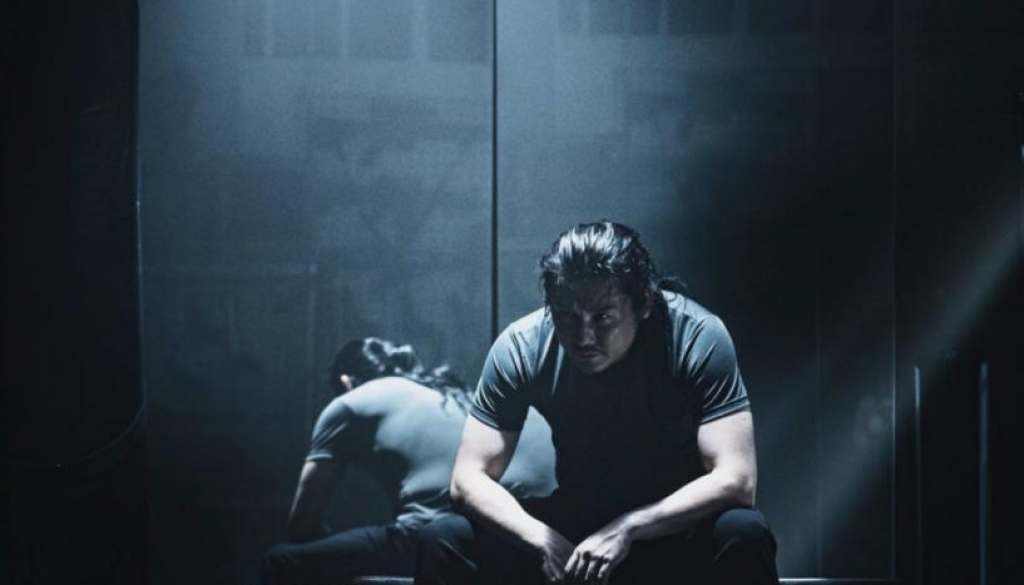
In that sense, the final duel between the star and astounding newcomer/Jeet Kune Do practitioner Togo Ishii is a fight for the ages, one of the most beautiful and gripping hand-to-hand combat sequences ever filmed that focuses on finding the grace in the realm of highly technical martial abilities. On top of highlighting the differences in fighting styles, the scene is filmed as if there will never be another one quite like that, each movement exalted through the lens of the camera, both fighters observed as masters of cinematic action. It’s an exhilarating, unforgettable scene, and one that action fans will no doubt be talking about for years to come. We’ll be watching out for Togo Ishii as an action performer.
There is no doubt the script’s metatextual elements will push some viewers out of the experience. They might very well be the film’s weakest point, and the character of young assistant Akira will leave many scratching their heads. Many will think TAK is full of himself, and they probably wouldn’t be wrong. But when one criticises an entire industry, well, a little bit of self-importance might be needed. At least the man walks the talk. We’ll take self-serious treaties on action cinema that deliver the goods over flashy, self-deprecating productions.
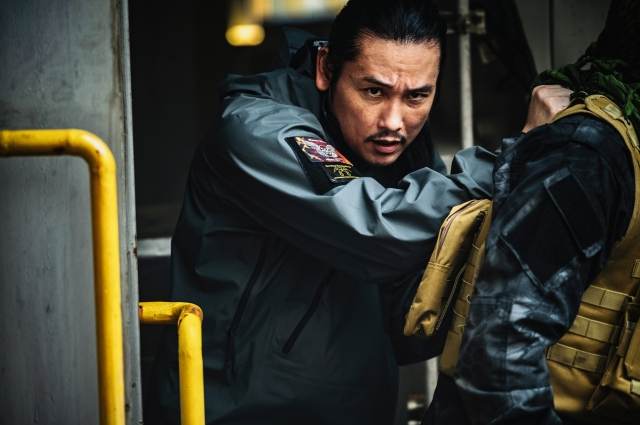
One Percenter is a panegyric of “flow” fighting, TAK-realism, and self-seriousness. This is the actor’s film from beginning to end, this is his mindset, his philosophy of action, his story as an actor and performer, his self examination as a pursuer of his own celluloid truth in the realm of kinetics. It won’t speak to everyone, or even maybe to most action fans, but it has the guts to stick to its concept and go all the way. This is not a film that was made to please anyone except TAK. But if you’re on the same wavelength, this is just as intense as you’d expect.
One Percenter – No European release date yet
Directed by Yudai Yamaguchi
With Tak Sakaguchi, Togo Ishii, Kohei Fukuyama

 Film Exposure