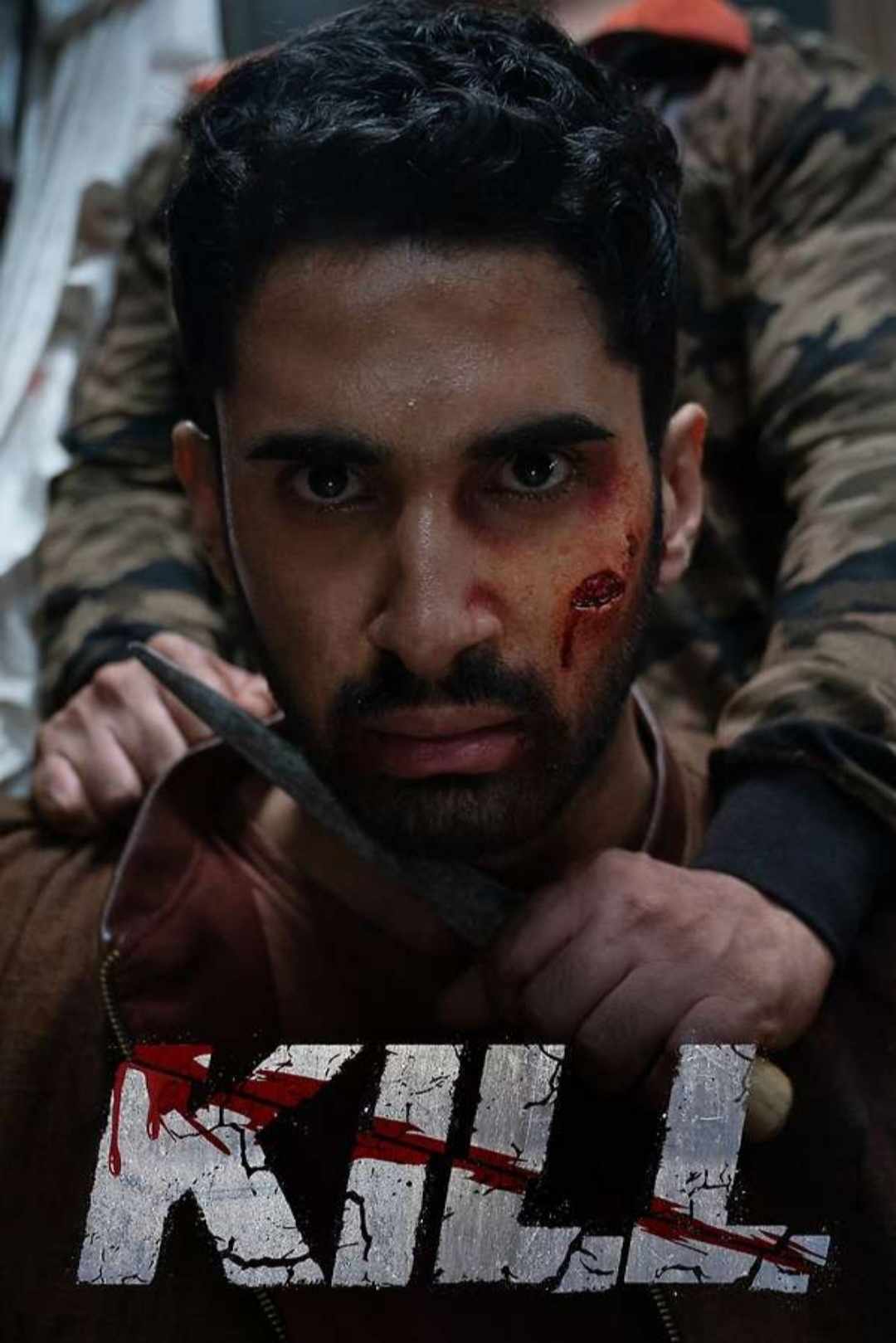
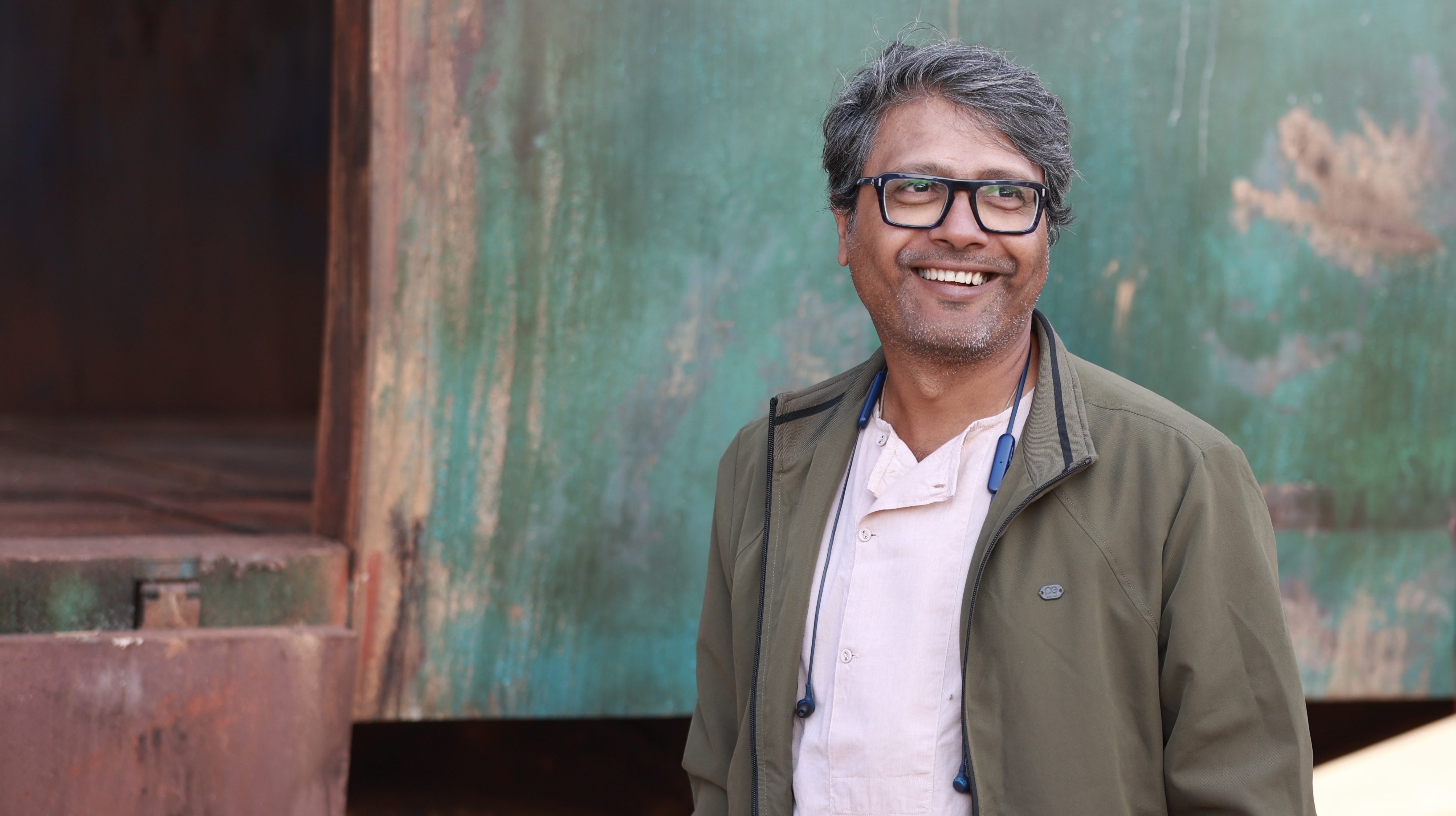
 No-holds-barred Indian actioner Kill is destined to take the festival scene by storm after a successful launch in the Midnight Madness section of TIFF. Fantastic Fest, Beyond Fest, Sitges… genre festivals are rightfully starting to follow suit, which will hopefully help build momentum for a wider release down the line. We saw the film in Toronto, but were able to catch up with its director Nikhil Nagesh Bhat at Fantastic Fest. We talked moving away from typical masala films, filming action in confined spaces, building flexible sets, finding future action star Lakshya, and collaborating with Korean action designer Oh Se-yeong!
FilmExposure: Kill is a one of a kind action film in India. In Toronto, you said it was born out of the desire to draw inspiration from films like The Raid. When writing the film, did you always know you wanted to move away from the hero masala films that populate Indian cinema?
Nikhil Bhat: Yes. When I met Guneet [Monga Kapoor]… I mean Guneet and I have known each other for quite some time, but a friend of mine called Alia knew about the story and arranged a meeting with Guneet and she wanted to produce an action film. I told her: “You know, this is not your typical kind of action film, I want to do an extreme action film over here, and not a typical masala film where you have the hero against five guys who go flying out”. Guneet jumped at it, so full credit to her for backing such a project. Dharma Productions and Sikhya Entertainment supported the script and my vision despite the fact that I had never done an action film before. To put that kind of faith in me, that’s really remarkable.
FE: Your main actor Lakshya is not a superstar yet. I think it works in the film’s favour, otherwise audiences might expect masala-type hero moments. You always knew you needed a new actor for the role? He takes a lot of damage, which is not very common in Indian action films nowadays.
NB: Lakshya is a Dharma talent as well. When it came to casting, my producer Karan Johar mentioned this guy called Lakshya, and there were two or three other people we had scheduled for a screen test as well for the role of the main lead. When I met Lakshya, and we spoke about the story and the character, it felt as if he was this guy who looks tough but is also vulnerable at the same time and that’s exactly what I wanted the character to be like. After the meeting, I called Guneet and told her that was it, I did not need to meet anyone else. I’m blessed that the meeting happened because what Lakshya brought to the film is this unflinching commitment… it’s just amazing the kind of commitment he’s shown. It’s unbelievable.
FE: The action directors on the film are Oh Se-yeong, who has notably worked on Snowpiercer, and Parvez Shaikh who was involved in the Indian blockbuster War. Did you seek them out specifically? How did their individual visions complement each other?
NB: We were looking for action directors and when I found out about Oh Se-yeong, I was very excited, and all the production team was looking to contact him. Because I had not done any action film before, I wrote down the action in minute detail, to the T. In the script, there are things like “He steps to the left, raises his hand and grabs the knife”. So it’s all written in vivid detail. This was during the second Covid wave. So we sent the script to Oh Se-yeong, and he was very excited when he learnt it was all set on a train. The next thing I know, he said he wanted to do the film. He understands English but doesn’t speak it, so his associate/translator was also there. But we only needed translations in the beginning, because after 6-7 days, he became so integrated, he and Parvez Shaikh would communicate through actions and things would just happen. Both of them have worked on other films together before, so they sort of function like a tango, their coordination is mind-blowing. It’s as if one person thinks it, and the other executes. I was blessed to have both of them. It just made my life so simpler, I couldn’t have asked for more.
FE: Are the characters in the film using the same combat system real-life Indian commandos use as well?
NB: Yes. Indian commandos train in at least 6 different fighting styles. Both action directors made sure that both Lakshya and Abhishek Chauhan [playing the protagonist’s best friend, also a commando] were able to perform properly. We needed to make sure their way of fighting never looked out of character.
FE: The action involved lots of rehearsals of course, but did you storyboard or did you previz? Do you plan every shot ahead of the shoot?
NB: Yes, we did storyboarding and previz. We prevized each action sequence not just once, but two or three times to include some of Oh Se-yeong’s spontaneous additions. We’d shoot the previz, come back, talk about it, and then do it again. This entire training programme took almost three months. We were not just training the commandos, but also the 40-45 goons who had to be trained in the style of street fighting. We could not use a lot of stunt people because even the actors playing simple goons, they had to perform, so we had to cast them and then train them. And then we needed to make sure their style was different to the commandos’. Actually, they shouldn’t have any kind of specific style, since they’re fighting as if it’s a street fight. It had to be very raw hand-to-hand combat.
FE: Shooting in confined spaces such as train cars brings its own challenges. Sometimes the camera itself becomes an obstacle, preventing you from doing exactly what you want. It looks like you used every square inch of available space to you. The relationship between action and claustrophobic space, is that something you wanted to explore? To find freedom of movement in tight spaces?
NB: We did a lot of research on the set. We not only had to use a set, but had to integrate camera movement and lighting, and for action purposes, it needed to be padded up. It was quite challenging to build that set, because we knew the camera would be moving as well as the characters, so we wanted the set to be collapsible. It was almost like Transformers where the set would collapse and then come back together in one shot. All the walls were collapsible and could slide. We used hydraulics, we used motors, some walls had to be pushed by people during the takes. Our Director of Photography Rafey Mahmood installed rails on the ceiling so that the camera could be mounted up there and move flawlessly in the corridors, and turn left and right when needed. There is hardly any steadicam in the film, because there was not enough space to use it. So yeah, everything had to be planned. Also, because the set was so small and narrow, we were not able to install the lights in the set. So we had to use the service lights, the ones you see in the film. That’s how we illuminated the entire set. And in Indian trains, there is usually a sound system for announcements. We installed one in our set, just like in actual trains, so that all the instructions could be communicated through that system. We basically created a full-fledged train on the set. That’s why it looks so real. I wanted the claustrophobia and the dilemma and the pressure to keep building up. As the story progresses, the light and the mood keep changing, and it adds on to the claustrophobia, to the pressure, to the tension the story is going through.
FE: That reminds me, there are shots where the character of Amrit is lit from the back, standing in a doorway, almost like a slasher horror movie figure. And there is this scene where he sets something up in one of the train cars to break down the bandits emotionally, that recalls things we’d see in horror movies. Is that something you were going for as well?
NB: So, he’s a commando. Indian commandos are not just equipped in martials arts, hand-to-hand combat, and action. They’re also psychologically very well equipped. He’s using all kinds of warfare techniques which he has been taught. In that particular scene, he’s trying to demoralize, to break down the bandits’ confidence. Even as an audience, when we see the goons breaking down, it has that effect. It was purposely done to break the goons, but I was not thinking in terms of horror or slasher codes, it’s just that the story demanded that kind of scenario.
FE: This could be a turning point for genre filmmaking in India, perhaps the same way Ram Gopal Varma changed the gangster film in the 90s. How do you think Kill will be received by Indian audiences?
NB: They love action! They love Korean films and Indonesian films. I am very hopeful they will accept this cinema, the same way it’s getting an incredible response in TIFF and Fantastic Fest, I really hope it’s the same kind of response in India. I’m sure they’ll love it.
FE: Do you think you will manage to release the film uncut in India?
NB: I don’t know, it’s a challenge. But we’re working on it, let’s see. We’re trying to do that, yeah.
FE: Will the sequel be named Overkill?
NB: Kill Again, Kill Too, Overkill… it could be many things!
Kill – No release date yet
Directed by Nikhil Nagesh Bhat
With Lakshya Lalwani, Tanya Maniktala, Raghav Juyal


 Film Exposure
21 commentaires »