Zombies are everywhere but they’re also adaptable – actually, their ubiquity might be linked to their malleability. Zombies can be urban, horrifying, comedic, romantic, spatial even… so why not use […]
Zombies are everywhere but they’re also adaptable – actually, their ubiquity might be linked to their malleability. Zombies can be urban, horrifying, comedic, romantic, spatial even… so why not use them as an enhancement to war cinema’s intrinsic allegories? That is the question Thai blockbuster filmmaker Kongkiat Khomsiri has chosen to ask himself with Operation Undead, a (relatively) big budget Thai war drama that uses horror tropes as tools to give more weight to its narrative, and a bigger emotional impact to its gut-wrenching resolutions.
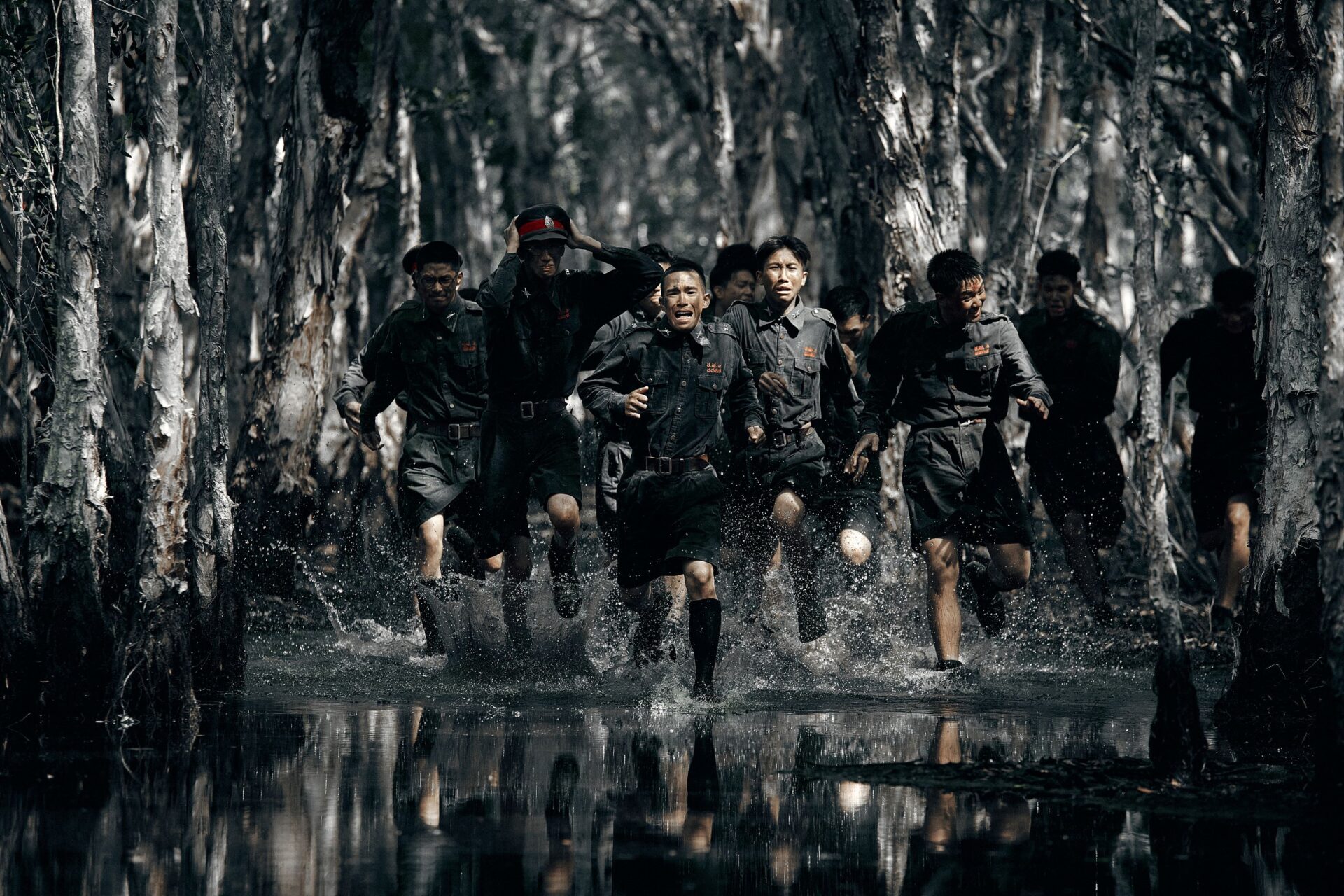
Kongkiat Khomsiri is no stranger to cinematic historiographical reinterpretations, having directed the mythologizing and patriotic sorcerer cop period trilogy Khun Pan. Remaining in a familiar WWII setting, the popular director switches gears and decides to leave the heroic national narrative behind in favour of a more corrosive take on war, Thai leadership, and humanity. Set in Thailand in the early forties, Operation Undead starts like any mainstream war comedy would: with 10 minutes of joyful camaraderie that establish a handful of characters (notably brothers Mek and Mok, one of whom is played by young prodigy Nonkul, seen in Bad Genius) and hints at a couple of emotional subplots – just enough to hook the audience in before moving into straight war film territory.
The film wastes no time in introducing its double threat: the Japanese army that is starting to invade Thailand, and the infected soldiers that turn into zombie-like creatures called “Fumetsu”. It is quickly revealed that the infected are the victims of experimental biological warfare from the Japanese, with whom the Thai government is shown as all too eager to collaborate (an interesting plot point that would have benefited from further development). The protagonists, a group of soldiers caught between a rock and a hard place, must then survive the zombie epidemic, prevent its spreading to the rest of the country, and fight off a foreign enemy unchallenged by the local authorities.
Khomsiri proves once again that he is a very capable filmmaker, this time delivering an immersive, dirty, rotting war picture (you’ll get your fill of worms and flies feasting on fresh human meat) that has no problem lingering on decomposing corpses, walking undead soldiers that were torn to shreds, and a world that is generally defined by pain and suffering. The film offers plenty of bloody images and some moments of gore, though it never becomes performative or comically over-the-top, maintaining instead a convincing level of war realism. The director includes several moments of inspired blocking or mise-en-scène that elevate his film beyond the pedestrian genre flick, for instance when the camera moves up, revealing that what we thought was simply a soldier filmed in a low angle was actually a decapitated victim being eaten by a zombie standing behind him, or when a character uses a flashlight at night, revealing stereotypical zombie legs walking toward the camera… that turn out to not be attached to a body at all.
The aforementioned Fumetsu are not your stereotypical zombies either: they crave human flesh, look like the living dead, and can infect anyone they injure, but they also retain their thoughts, consciousness, and personality. They can talk, have a conversation, fight among themselves, and feel the whole range of human emotions. This gives the director ample opportunity to explore questions of morality and humanity within the framework of a war picture. In one scene, the infected soldiers ask each other what their life plans were before being turned into zombies; and then, they sing a song of melancholy together.
Later, they make the shared decision to return to their home village, putting their families in danger. One little girl in particular recognizes her father, now infected, and asks him who hurt him this way. The film plays the scene straight, never cheating the audience of the emotional pay-off, but instead challenging our expectations (Will the girl run? Will the father resist his cannibalistic cravings?). Khomsiri also uses the Fumetsu in a playful narrative way, leveraging the logical implications of the infection trope to propose different emotional dilemmas, notably towards the end.
The Japanese are once again portrayed as unredeemably evil imperialists, but they do offer an interesting philosophical contrast with the Thai soldiers. The film establishes early on that the Japanese view the Futmetsu as superior in terms of strength and aggressiveness, a potential next step in human evolution. However, they have “an emptiness inside them; they’ve lost all notions of honour, nation, and race.” This lack of racial or national belonging makes them unsuitable successors for the Japanese, but the Thai soldiers express a different kind of loyalty when Mek tells his brother that for him, “nation is everyone in our family”, a statement repeated twice in the film, which implies that Thai soldiers were always considered as non-humans by Japan’s commanding officers due to their diverging take on nationalism.
It is within the dark recesses of a natural cave that the director brings this confrontation of ideas to a close. A strange choice that hampers visibility when the rest of the film has offered perfectly legible scenes, but Khomsiri manages to end his film on a high emotional note, delivering a striking final blow to the audience.
Not so much a zombie film as a war film that uses zombies to better explore themes of family, nation, and violence, Operation Undead never goes overboard and smartly utilises its budget to offer a contained, immersive, and bloody genre picture that constantly challenges audience’s expectations. Operation successful for Kongkiat Khomsiri and the Thai film industry.
Operation Undead had its world premiere on July 20th, 2024, at the New York Asian Film Festival. Thanks to Qing Jin and Claire Gu for making this review possible.
Operation Undead– No European release date yet Directed by Kongkiat Khomsiri With Nonkul, Awat Ratanapintha, Supitcha Sangkhachinda




 Film Exposure