English
FF 2024 – GHOST KILLER: The Kinetic Synergy of Modern Japanese Actioners
Action master Kensuke Sonomura strikes again!
 Film Exposure
Site consacré au cinéma proposant des articles de fond et documentés.
Action master Kensuke Sonomura strikes again!
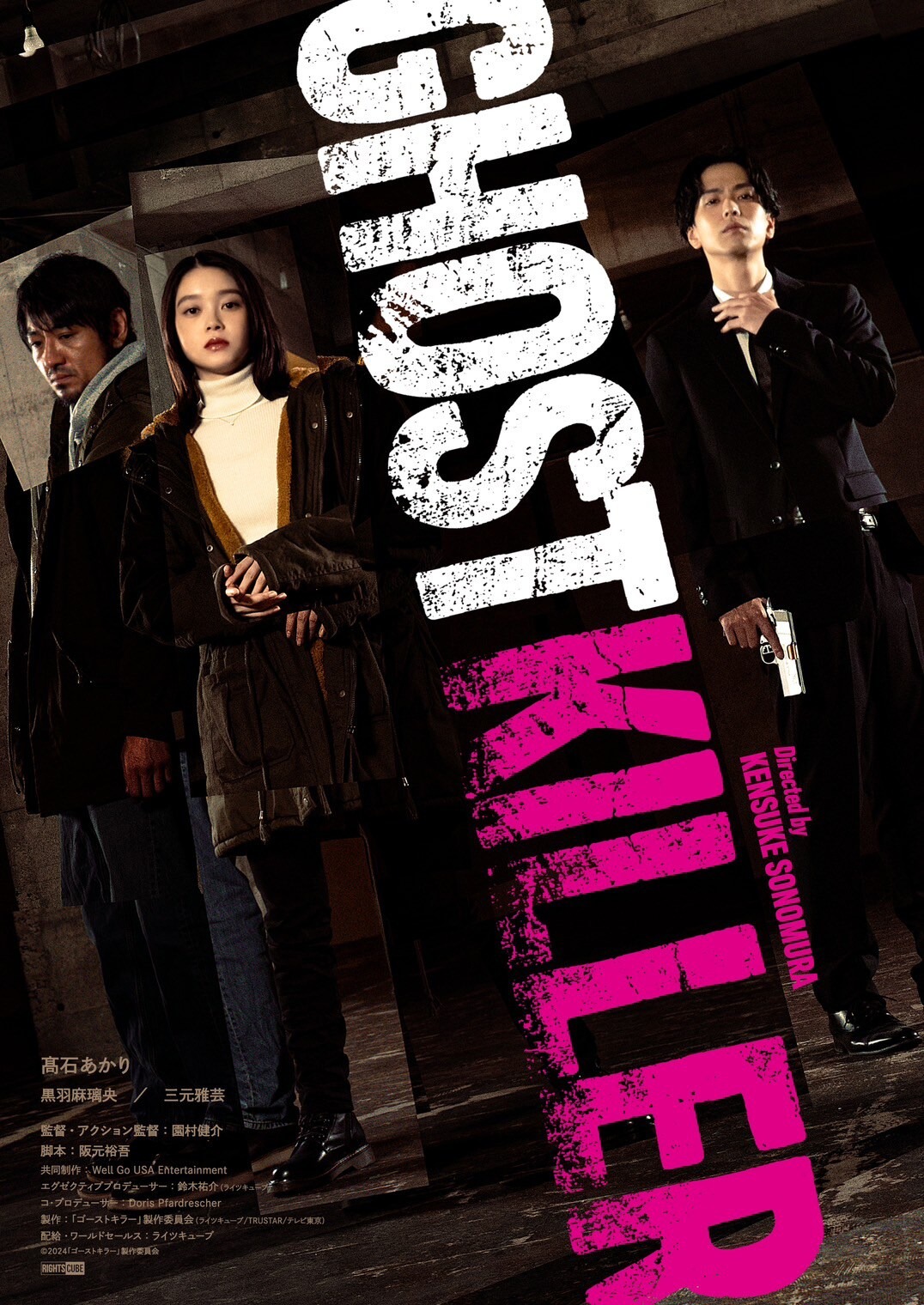
You know that sound: the crisp, rustling sound of the fabrics under strain; the many, precise, squeaky footsteps; the laboured breathing; the irregular but powerful hits. Barely a few seconds in, and already there is no doubt: you are indeed watching the new film from Kensuke Sonomura! After years working as a stuntman and action director for some of the most popular Japanese action movies, Sonomura started his directing career with the micro budget mood piece Hydra, followed by the V-Cinema homage/Yakuza saga Bad City. For his third feature film, he calls on the services of rising star writer Yugo Sakamoto (for whom he choreographed the Baby Assassins films), and gives centre stage to the impressive, magnetic Akari Takaishi and reliable veteran Masanori Mimoto – an all-star team for fans of contemporary Japanese action cinema.
Fumika Matsuoka is just another college girl. She works a thankless job at a restaurant, lives in a tiny studio apartment, has a friend who is regularly beaten by her “boyfriend”, and is having a hard time breaking into the profession she likes. That’s not even mentioning the simultaneously boring and creepy guys she ends up on dates with. One morning, she finds a bullet lying on the ground. Except it’s not just any bullet… it’s the one that killed professional hitman Hideo Kudo, who now appears as a ghost to her and no one else. Soon, they find out Kudo can take control of Fumika’s body, allowing her to use all his combat expertise to get out of tricky situations. It doesn’t take long for things to escalate, of course.
If the film does start with a short action scene that is reminiscent of Hydra in its scale and setting, the narrative quickly pivots to Akari Takaishi’s protagonist. Unwillingly thrown into the chaos of the underworld, Fumika remains the audience’s anchor throughout: incredulous, sceptical, but also and perhaps most importantly extremely bothered to be taken away from the normality of her life, however challenging it may be. The script insists on how difficult it is for her to adapt and accept the increasing levels of violence she finds herself surrounded with. Takaishi, who debuted as an actress under a decade ago in her teens, proves she has grown into a charismatic leading figure who is given a lot to do here by Sonomura, from comedy to drama, to hand-to-hand combat and gun action.
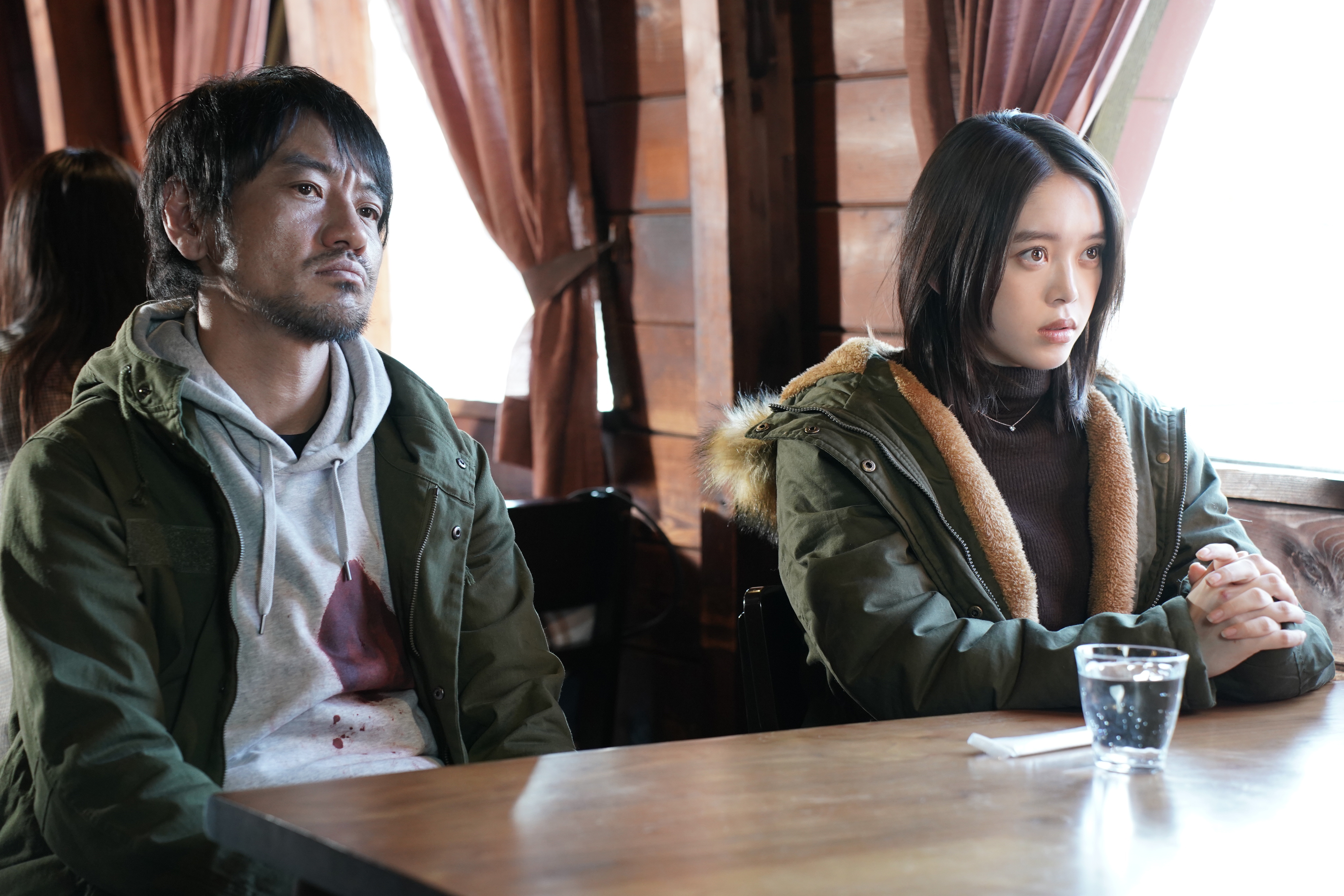
Masanori Mimoto turns out to be an interesting onscreen partner for her, counterbalancing her sensibility with the cool demeanour of the (deceased) professional assassin. Hellbent on finding the ones responsible for his death, he also progressively discovers a side of human life that had remained foreign to him and sets off on a path of redemption. This aspect is one of the most interesting in the film, as Kudo literally manifests his violence into the world through the body of an innocent-looking young woman, a catalyst through whom he realises violence can have different consequences depending on intent. Granted, Fumika is unable to change the rules of this world (pain, executions, deaths still prevail), but together they seek to give Kudo peace through cathartic brutality – not an original idea by any measure, but one that feels reinvigorated by the presence of Akari Takaishi’s character.
Yugo Sakamoto’s style of writing is fairly different here than in his most popular franchise, sketching what could potentially become a mentor/student relationship which he decides to subvert slightly by making the two main characters codependent. More surprising is the relationship between dead hitman Kudo and still alive assassin Riku Kagehara (played by Mario Kuroba), with the latter ending up revealing unexpected feelings about his former peer. If the character dynamics can easily be attributed to Sakamoto’s script, the way emotional beats are downplayed feels like a very Sonomura thing, however. There is no outpouring of regret, love, or even real anger… as Fumika underlines in one scene, these assassins remain terrible at oral communication.
It’s no wonder then, that they turn out to be pretty amazing at non-verbal arguing. Kensuke Sonomura’s signature style is ubiquitous, whether people fight barehand or with guns: it’s all about looking for the most dynamic way of delivering kinetic, propelling action scenes. Motion reigns supreme as characters keep lounging forward, switching tactics, and testing their opponents for an opening. Once a fight starts, they cannot remain still, and the camera follows suit. It’s not a handheld affair, and Sonomura opts for rather long, legible shots, but the camera does have to readjust position according to the choreography, circling around the performers in search of the best vantage point. The choreography is detailed, precise, at a crossroads between the necessity for the performers to hit their cues and the realism brought by the prevalence of spontaneous-looking reactions. Sometimes the filmmaker focuses on a specific element of the fight (a leg grab, an attempt at getting back up, and so on) without relying too much on inserts however, which is quite the departure from traditional action filmmaking. An when inserts do occur, Sonomura sometimes turns them into longer shots by pivoting the camera to expand or reorient his framing, enriching the visual language of the scene.

Knives or pointy objects once again play a major role in a couple of scenes, and even though the filmmaker does not shy away from gunfights – one in particular is really cool, with Takaishi and Mimoto taking turns in front of the camera as shots are efficiently strung together into a fake oner – it is clearly in the hand-to-hand department that Sonomura revels. The film is far from being a non-stop action fest; running at 104 minutes, it features a handful of set pieces and spends appropriate time with its characters in between. The final fight, a blistering, breathtaking duel between two actors that fans of Hydra will be happy to see reunited onscreen (and we don’t see incredible stuntman and fighter Naohiro Kawamoto nearly enough), offers a very satisfying release. The camera is both stable (it never shakes) and mobile (it readjusts framing constantly), sometimes going from a crane high angle shot to a straight wide shot in one swift move in order to better capture the fight. The score, from Bad City composer Nobuhiko Morino, is actually a little reminiscent of Hydra’s, as it combines ambiant synthwave vibes with the occasional solemn chorus. That being said, I do think Sonomura could have seized the opportunity to push the experiment much further in filming an action scene involving a fighter made up of essentially two distinct characters.
The script works generally well even if some details will come off as phoned in to the most nitpicking audience members, and the overall atmosphere of the film is a departure from both of Sonomura’s previous features – miles away from the messy street-level brawls and Yakuza gang wars of Bad City, and far removed from the neon-soaked liminal spaces of Hydra. At times, Ghost Killer might even feel like a Johnnie To piece: entirely focused on its high concept, and set in a world that seems devoid of life outside of its narrative, a world where every character, every detail plays a part in the story.
The synergy between Sakamoto’s character work and Sonomura’s propelling kinetics results in a highly entertaining, unstoppable display of what makes modern Japanese action cinema so compelling. No one combines high-level technicality with chaotic brawling quite like Sonomura, and Ghost Killer might just be the most unadulterated example of his approach to action: always aware of its predecessors, but eager to forge a new path for one of the most lively and promising film industries of our times.
Ghost Killer had its world premiere at Fantastic Fest on September 19th, 2024. Thanks to WellGo USA for making this review possible.
Ghost Killer – No European release date yet
Directed by Kensuke Sonomura
With Akari Takaishi, Masanori Mimoto, Mario Kuroba

 Film Exposure