English
STRIKING RESCUE – Will Tony Jaa bring about the Chinese DTV paradigm shift?
If you want to see the Muay Thai warrior breaking bodies with his signature moves, you’ll get your money’s worth.
 Film Exposure
Site consacré au cinéma proposant des articles de fond et documentés.
If you want to see the Muay Thai warrior breaking bodies with his signature moves, you’ll get your money’s worth.
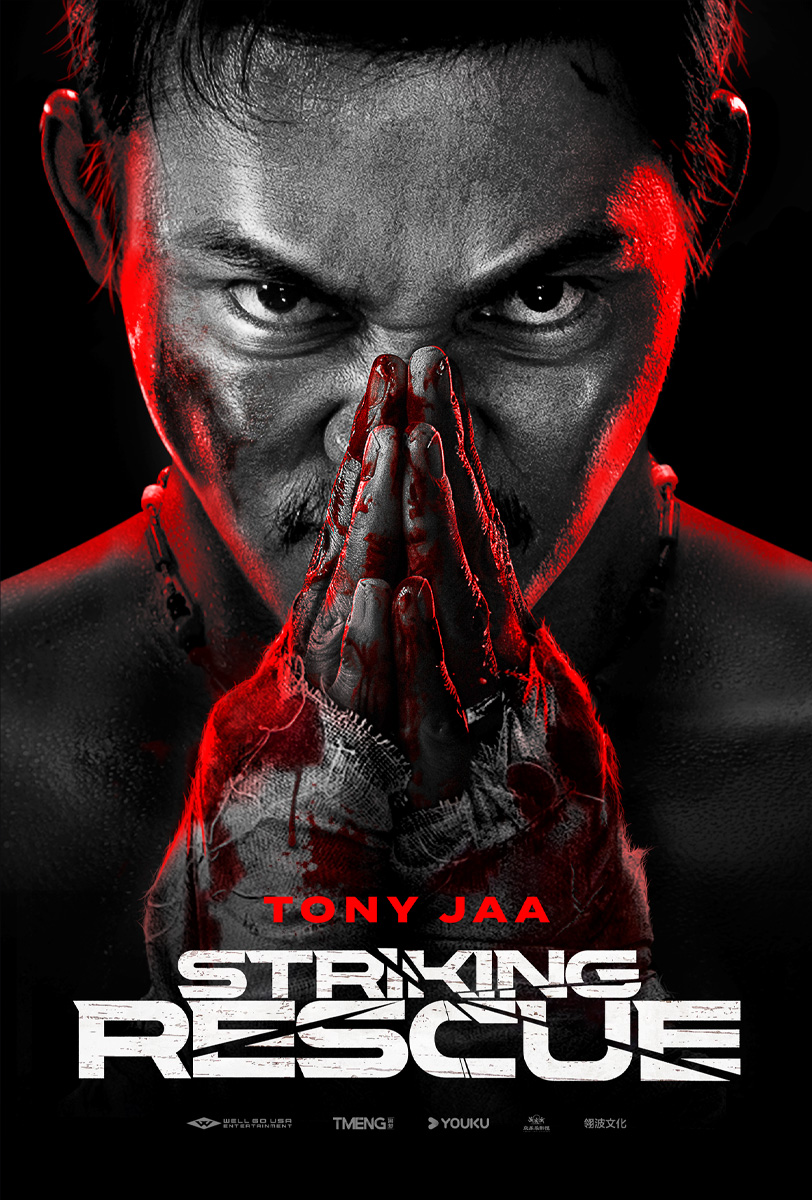
Striking Rescue’s opening credits are like a promise: Tony Jaa moving in slow motion in a dimly lit room, releasing all of his contained rage on a punching bag as visions of his past trauma flash before his eyes. His bloody fist shakes in the foreground… A mere two minutes later, Jaa is already following the man he believes to be responsible for his family’s death to his lair, ready to get answers and exact revenge. The information he gets, of course, takes him to a new lead, moving the story into motion, but it’s an interesting prologue, intent on convincing the audience they’re watching exactly the type of film Tony Jaa hasn’t been in in way too many years: a hard-hitting, all-out action spectacle. Promises kept?
What the film has going for itself is its breakneck pace. The altogether pretty conventional and predictable plot will not wow anyone, but at least it answers to an old principle that used to govern Hong Kong movies in the late 80s: the need to intersperse an action scene at least every 15 to 20 minutes maximum to keep the viewer engaged. Problem is, sometimes – especially in the first half – these fights do not involve Tony Jaa at all, even though the Thai movie star is clearly the best actor in the film.
The drama aspect, namely Jaa’s tragic past, the derivative drug trafficking subplot, and the tensions between the young girl he helps and her father, is (mercifully) mostly kept to a minimum because none of it really manages to be convincing, suffering either from perfunctory writing or questionable acting. The film’s structure very obviously resembles that of other Chinese streamers’ productions, starting strong, then backloading the second half with the best the movie has to offer. Which means that the first act and most of the second might try your patience if Tony Jaa’s presence on-screen is a must for you.
Thankfully, when things get truly moving and Jaa is involved, the action delivers the goods: with energetic choreographies and clean camerawork, director Cheng Siyi – who also released the Danny Chan starrer Desperado this year – efficiently conveys Jaa’s power and agility. By cutting around the hits (as opposed to cutting on them) and by displaying a genuine desire to find the best way to showcase his star’s martial chops, Cheng ensures his film becomes a suitable vehicle for his actor’s specific set of skills. When filming other fighters, Cheng breaks down the action to make it look brutal enough without straining suspension of disbelief. Most importantly, CGI is kept to a minimum in the foreground, only becoming visible in a handful of dangerous stunt shots, which is the best possible strategy for these productions, as computer generated images in DTV actioners still tend to look mediocre (see the otherwise enjoyable Hunt the Wicked from Chris Huo, a film that boasts cool choreographies but an immersion-breaking CGI hammer).
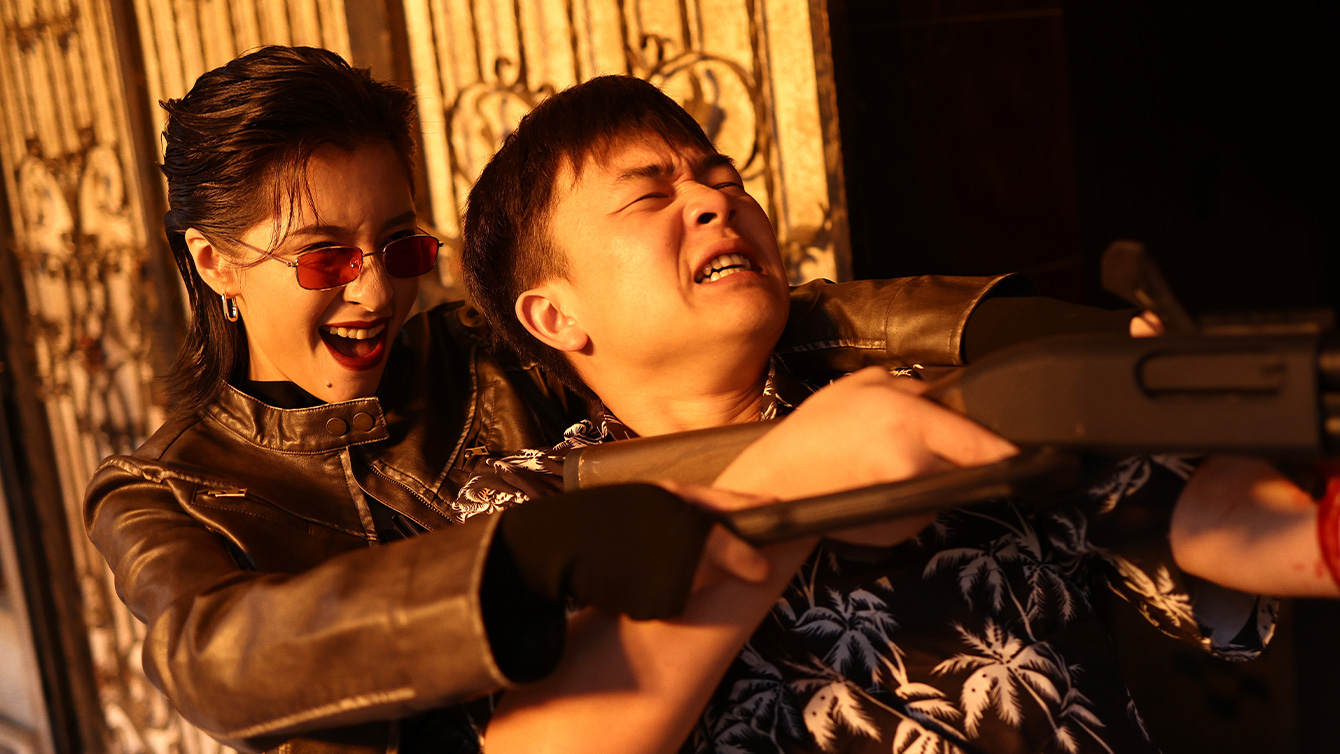
From the opening brawl to the mid-film motorbike stunts, to the hallway fight, and the final duel against Xing Yu (a regular of Chinese DTVs), Cheng makes Jaa shine more than once. The film has no other objectives, doesn’t tackle any themes worth discussing beyond surface-level trivialities, doesn’t push the envelope action-wise beyond welcome efficiency (unlike SPL 2), and holds no specific cultural depth (unlike Ong Bak). It might not stay in the action cinema history books as one of Jaa’s most iconic, but it might be the one people look at when talking about his (second) return. Time will tell.
However, what makes Striking Rescue a particularly interesting film is its origin. A Chinese production from Youku directed by a filmmaker known for his work in direct-to-streaming works, it is the first of this particular industry to include a truly international star as the lead. The film’s theatrical release in several territories (USA, Thailand) is perhaps a good sign, or at least a sign of things to come: previously confined to Chinese streaming platforms like iQiyi or Tencent, these productions might soon be able to find a bigger audience well beyond the borders of China. One can certainly hope, anyway, as action movie maestro Qin Pengfei has a movie called Wings of Dread starring Iko Uwais and Ashton Chen in the pipeline. With any luck, it’ll be the next foray of Chinese actioners into Western cinemas, and the distribution paradigm will finally start to shift.
In any case, and despite its many narrative shortcomings, Striking Rescue fairly easily ends up being Tony Jaa’s best film in some time – and a better movie than any of his work in America so far. If you want to see the Muay Thai warrior breaking bodies with his signature moves, you’ll get your money’s worth. Just don’t expect too much beyond that, but if you’re an action movie fan and want more of these films to reach western cinemas, supporting this release should be a no-brainer.
Striking Rescue opens in North American cinemas on December 6th, 2024. Thanks to Well Go USA for making this review possible.
Striking Rescue – No European release yet
Directed by Cheng Siyi
With Tony Jaa, Xing Yu, Philip Keung

 Film Exposure