English
THE PROSECUTOR – No Fists, No Justice
You’re here because you want to know whether Donnie Yen still kicks ass in his latest film. Rest assured, he does.
 Film Exposure
Site consacré au cinéma proposant des articles de fond et documentés.
You’re here because you want to know whether Donnie Yen still kicks ass in his latest film. Rest assured, he does.
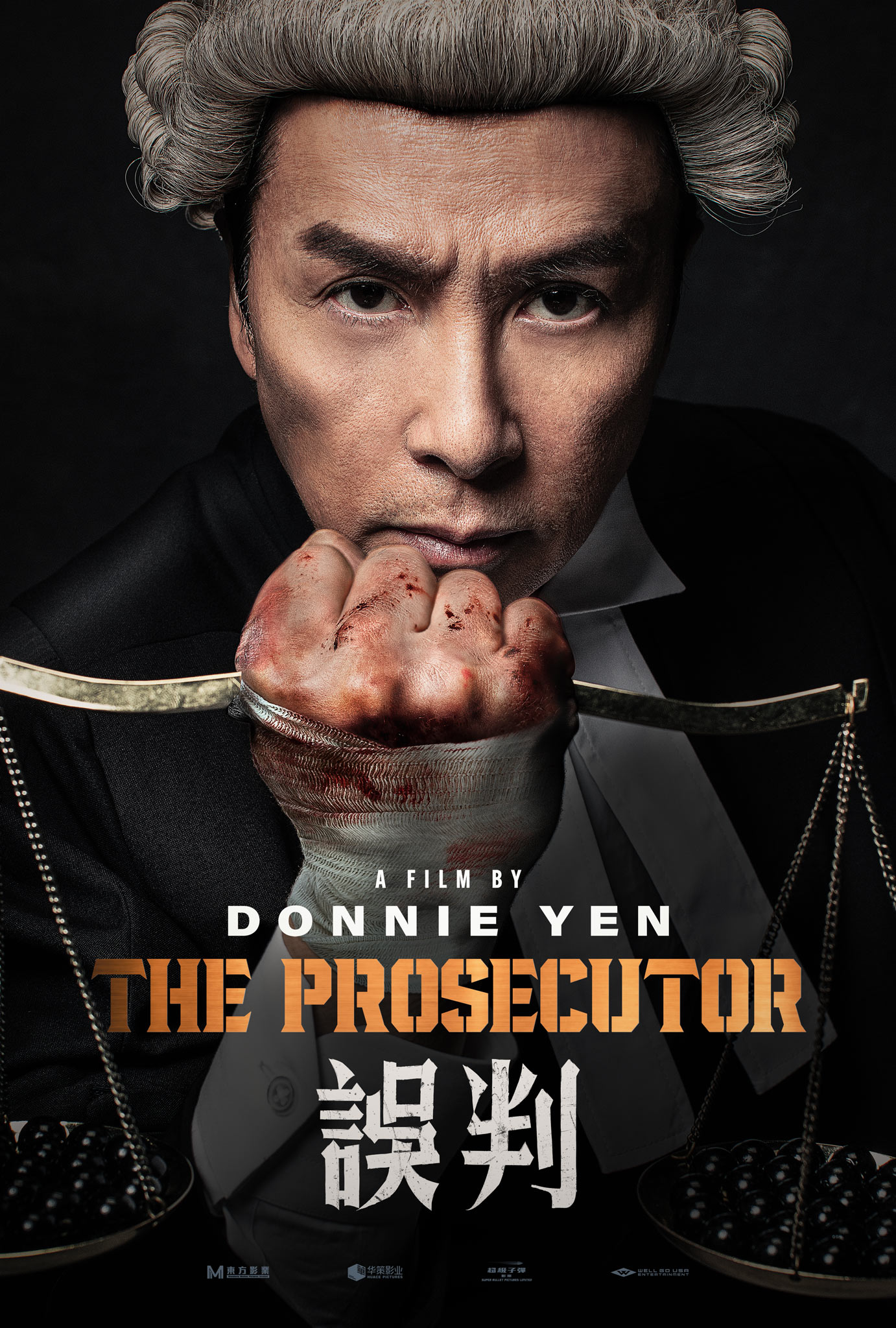
You’re here because you want to know whether Donnie Yen still kicks ass in his latest film. Rest assured, he does. The gist of The Prosecutor is that the seemingly timeless action star tries to ride the wave of successful court dramas (A Guilty Conscience, The Sparring Partner) that have taken hold of the Hong Kong box office in the last couple of years, this time by inserting (of course) regular action set pieces that interrupt the dense flow of legal parlance. Don’t go in expecting a nuanced look at the very real societal issues that involve the tense relationship between the police and the justice system, and you’ll have a good time with it.
Inspector Fok Chi-ho is something of a local legend in the Hong Kong police department, but his frustrations with the judiciary reach boiling point when a criminal he nearly lost his life attempting to arrest is released unconditionally in a ruling he deems profoundly unjust. Moved by a deep desire to change things from within, Fok resigns from the police force and becomes a prosecutor. Unwilling to compromise, he brings the whole system to the brink of existential crisis with his very first case.
Back behind the camera after the occasionally entertaining Sakra, Donnie Yen comes out all guns blazing with the opening act of The Prosecutor, a propulsive narrative sequence of events that uses the power of editing to smartly condense time and develop a syncretic approach to its storytelling. While the film’s major scenes are spread out and expansive, everything in between often almost looks like a series of montages. This decision will probably annoy some viewers that prefer their narratives to be more classically structured, but Yen’s strategy does allow him the luxury of unfolding several long, talkative court scenes as well as five notable action set pieces.
Formally speaking, the court drama aspect of The Prosecutor is a serviceable exercise in commercial filmmaking which seems, however, utterly terrified of suggesting anything other than absolute moral righteousness from its protagonist and offering absolutely nothing else substantially to the audience.
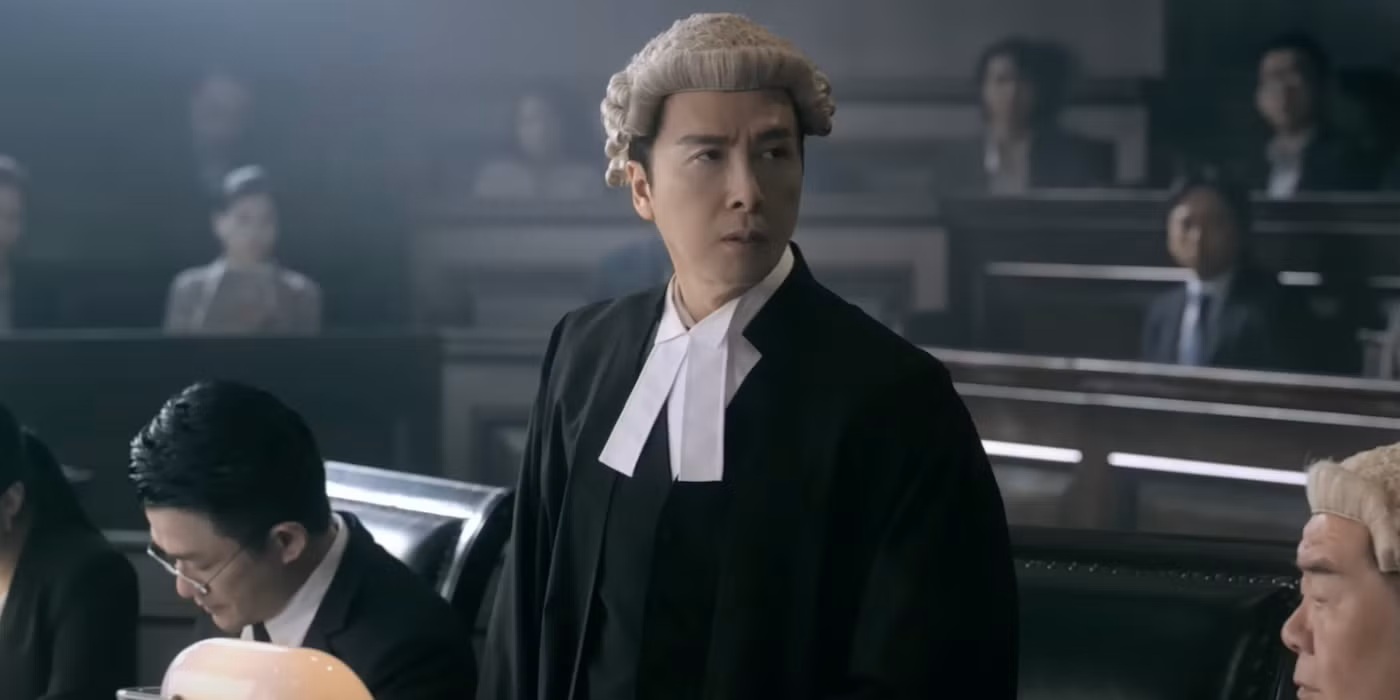
Indeed, Yen’s portrayal of the fundamental tensions governing police work and the justice system will come as no surprise to anyone familiar enough with his filmography, so don’t go looking for morally grey thought exercises or ethical introspections. His unwavering faith in the police force and disillusion with the legal system even becomes the main motivating factor for the film’s premise, and the script subsequently spares no expense portraying every character around him as incompetent lawyers, corrupt prosecutors, arrogant judges, criminals masquerading as public defenders, career-obsessed politicians, or lazy public servants. Enter Donnie Yen and his punches. In this world, there is no fairness without fists, no justice without the use of force. Yen’s character Fok must therefore bring in a police mindset and a police approach to change the Department of Justice from within, and finally provide the people of Hong Kong with hope.
It is a fundamentally black-and-white vision of society that offers even less nuance than the already depressingly clear-cut Raging Fire. But just as was the case with that film, The Prosecutor ends up being somewhat of an endearing watching experience, a comfortable cinematic journey that revels in the illusion that white knights exist and that they are tirelessly working to make the world a better place, sometimes by slipping a few bank notes to the elderly poor, but mostly by pummeling bad guys into submission. The film is obviously very much aware of that, as demonstrated by some of the humour peppered throughout – a moment in particular, when Kent Cheng’s character calls the police saying “Your friend is beating up a hundred people… No! I mean he’s being beaten up by a hundred people!”, comes to mind.
The lack of ambiguity is neither surprising nor unexpected and does make it easier morally speaking to see villains getting their face bashed in – it’s just kind of a shame the smart premise wasn’t used for something more morally challenging. As it stands, Donnie Yen leans on a panel of famous, experienced Hong Kong actors (Michael Hui, Francis Ng, Kent Cheng) to sell his moral fantasy well enough – an endeavour facilitated by his brisk, sleek directing style.

Although the film is at times verbose, it does feature five generous action set pieces more or less evenly spaced out throughout the narrative. The obvious care that went into these scenes makes it crystal clear where the crew’s primary interest lay: in delivering bone-crunching, exhilarating action. The opening sequence is perhaps the one that takes the most risks with its startling, sometimes disorienting oner, a scene in which the camera switches back and forth between third-person and first-person POV (FPS style). The result is not entirely successful but also not uninteresting in its attempt at creating stronger immersion. Subsequent fights and chases are more conventionally filmed but do offer a kinetic crescendo of violence, occasionally serving up memorable shots, like when Yen jumps down one level in a parking garage parkour-style, and the camera follows him down without cutting, momentarily reminding the audience of that camera rappelling down the side of a building in Tsui Hark’s Time and Tide. While Fok himself repeatedly says in the second half that his age is another reason for his career change, Yen proves to still be capable of becoming an imposing physical presence on screen.
The action is directed by Takahito Ōuchi, who had been stunt coordinator on the Rurouni Kenshin saga, and action director on the HiGH&LOW film series. For The Prosecutor, Ōuchi opts for a grounded but striking style of fighting that lends realism and credibility to the brawls. The one in the night club, notably, stands out as a rare example of credible one-vs-many fight because of the way Yen uses his environment to handle and channel his opponents (that whole sequence’s neon aesthetics being slightly reminiscent of Yen’s own directorial debut Ballistic Kiss). The climatic action sequence set on a commuter train concludes the film on a high note. Yen and Ōuchi truly flex their directing muscles here, capturing the fast-paced action with precision, and harnessing the power of editing to transform every shot into an essential building block to their visual phrases. It might sound obvious, but not every action film does it, far from it. When a goon attacks Fok with a hammer, the camera keeps switching position (god’s view, close-up, medium wide shot, quick tracking shot, well-placed inserts, and so on), creating a visual melody that culminates in Yen ending their fight in a particularly satisfying way given the environment around them. Always efficiency-driven, Yen does not dwell on the matter and runs to his next duel, the Steadicam following him through the urban battleground. Since Yen’s ultimate opponent, played by the immensely impressive Kang Yu, is portrayed as a hulking, near supernatural beast, the style progressively slides to a more power-focused representation of violence, but the action’s consistent technicity remains a reliable source of visual pleasure. In addition, the fact that the sound design puts so much emphasis on Donnie Yen’s kicks, to the point that they sometimes nearly sound like gunshots, only adds to the sensory enjoyment provided by the film.
Even though it is inspired by an actual trial, The Prosecutor makes it very clear, very quickly that the world portrayed on screen is a power fantasy – the power of moral righteousness to change the world, and the power of one man’s fists to bend the future to his will. The film knows what you came for and has no further moral pretense; in the sense that it achieves what it set out to do, it is a resounding success. You wanted to know whether Donnie Yen still kicks ass? He sure does.
The Prosecutor opens in U.S theatres on January 10th, 2024. Thanks to Well Go USA for making this review possible.
The Prosecutor – No European release date yet
Directed by Donnie Yen
With Donnie Yen, Michael Hui, Ray Lui, Francis Ng

 Film Exposure