English
CREATION OF THE GODS II: DEMON FORCE – Revitalizing the Chinese Mythological Epic
A delirious whirlwind of mythological battles that will decide the fate of the Chinese civilization.
 Film Exposure
Site consacré au cinéma proposant des articles de fond et documentés.
A delirious whirlwind of mythological battles that will decide the fate of the Chinese civilization.
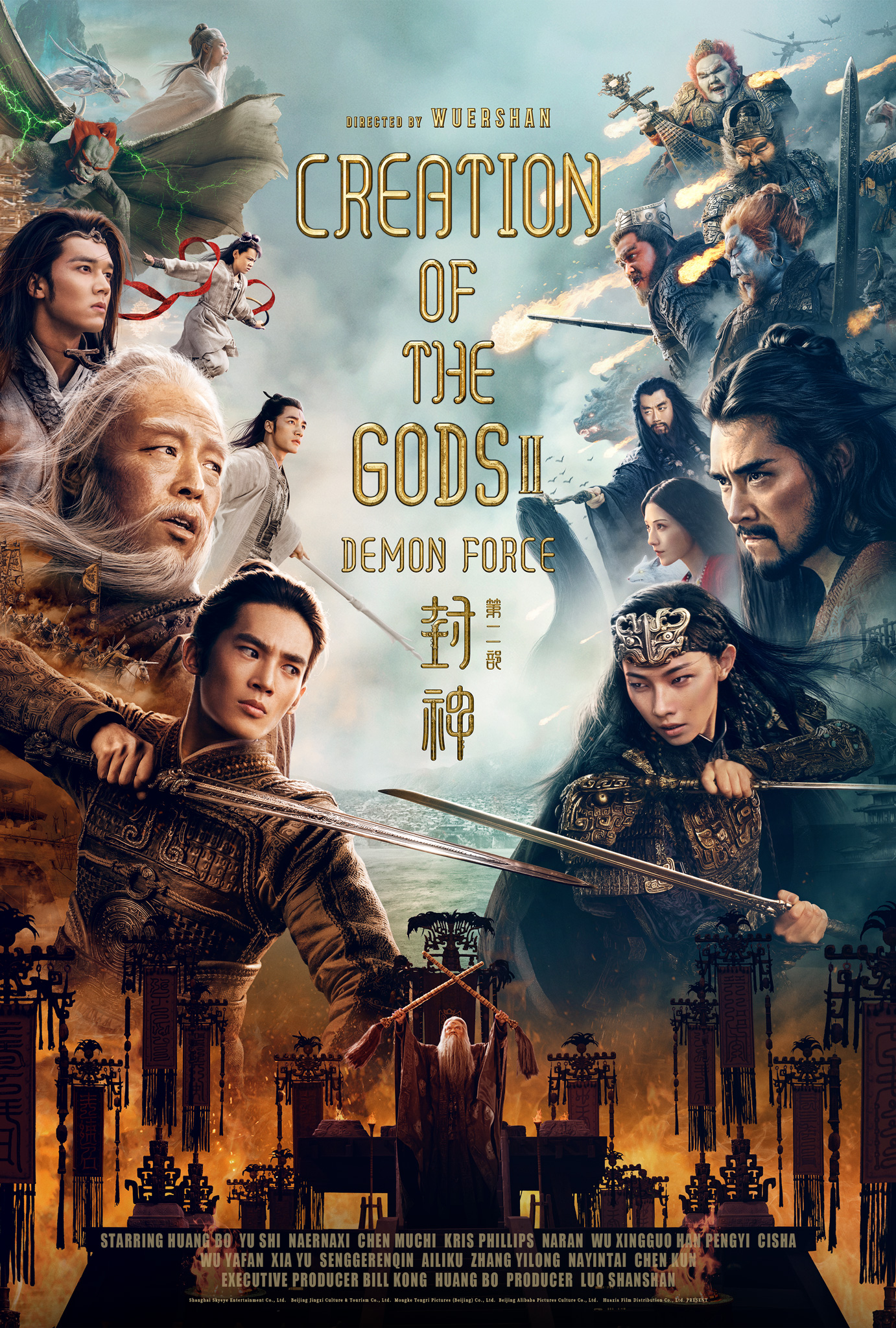
Less than two years ago, director Wuershan finally shared the first part of his ambitious trilogy with the world after a very long gestation period. Kingdom of Storms was an impressive feat of narrative reinvention, grounding the foundational myths of the Investiture of the Gods literature into a more character-driven court intrigue adaptation, only occasionally letting the overtly fantastical taking over. It turns out it was all part of the plan to unleash the full power of this legendary tale upon the not so unsuspecting audience. Demon Force is a direct sequel that goes full fantasy with wild abandon, delivering one of the most awe-inspiring tales of mythology of recent years.
If you haven’t seen Kingdom of Storms or don’t remember it well, you really should (re)watch it before Demon Force. Not that you can’t follow the plot without it (it’s straightforward enough) but getting familiar with the characters and most importantly the world the first film carefully took its time to build multiplies the sequel’s scale and power tenfold. It also offers a striking contrast between all the painstakingly laid-out elements of the first part and the fantastical whirlwind of supernatural events unfolding in this sequel.
Young hero Ji Fa, who is mourning the loss of his dear friend, the crown prince of the Shang dynasty, must prepare to defend the city of Xiqi with the help of the Kunlun deities against the forces of evil serving the malevolent king. The very fate of the Chinese world hangs in the balance.
As explained in the review for part 1, the Investiture of the Gods is a seminal piece of Chinese literature that portrays, in heroic and mythological terms, the transition from barbarism to morality, laying the building blocks to Chinese civilization as we know it. However, Wuershan assumes that, going into Demon Force, the audience already knows that, so he mercifully decides not to waste any time: within 20 minutes, the viewer has already witnessed a mystical energy battle in the immortal realm of Kunlun, a chase-fight on top of two galloping horses next to the edge of a cliff, an electrical flying demon, and a liquid sword that turns into a giant metallic dragon.
 Kingdom of Storms impressed by its restraint and disappointed with its somewhat unconvincing CGI. Demon Force takes a 180° turn, embracing its filmmaker’s delirious ecstasy with CGI extravaganzas, and leaving its formerly dramatic narrative behind. This sequel rushes at breathless pace from one over-the-top incident to the next, multiplying feats of digital imaginations along the way, vastly improving on the first part’s sometimes weak CG backgrounds (some digital imagery remains a little weak, notably the Yin Jiao character, but the results are overall much better). It works remarkably well if paired with all the character work from the first film, becoming an organic continuation of the story that ups the ante on every front.
The battle that starts at around 50 minutes into the film confirms that Demon Force is no Kingdom of Storms, and that the audience is in for a wild ride. After all, the source material is full of cinegenic, colorful ideas that constantly fuel the narrative, and Wuershan makes no apology in using them: a giant flying umbrella that traps the enemies’ arrows and throws them back at them, a pipa that throws fireballs or generates shock waves, undead soldiers, and of course the resurrected Yin Jiao (a blue giant composed of three bodies that meet at the hips, all sharing a single pair of legs). Yin Jiao, assassinated by his father in the previous film, travels beyond the veil of death thanks to his sheer fury, which he must learn to channel for the good of mankind. A physical incarnation of man’s eternal struggle between his instinct for immediate personal gratification and his desire to birth a better world.
While Demon Force remains consistently entertaining and full of wonders, its structure can get a little redundant for whomever doesn’t find themselves on the same wavelength. The intense pace means actors have less space to play around with their characters, and therefore deliver serviceable performances, but nothing particularly remarkable, with the notable exception of Nashi, who plays the young, fierce general Deng Chanyu to perfection. Some secondary fighters are written in and out of the film in a somewhat frustrating manner, most notably Nezha and Jiang Ziya.
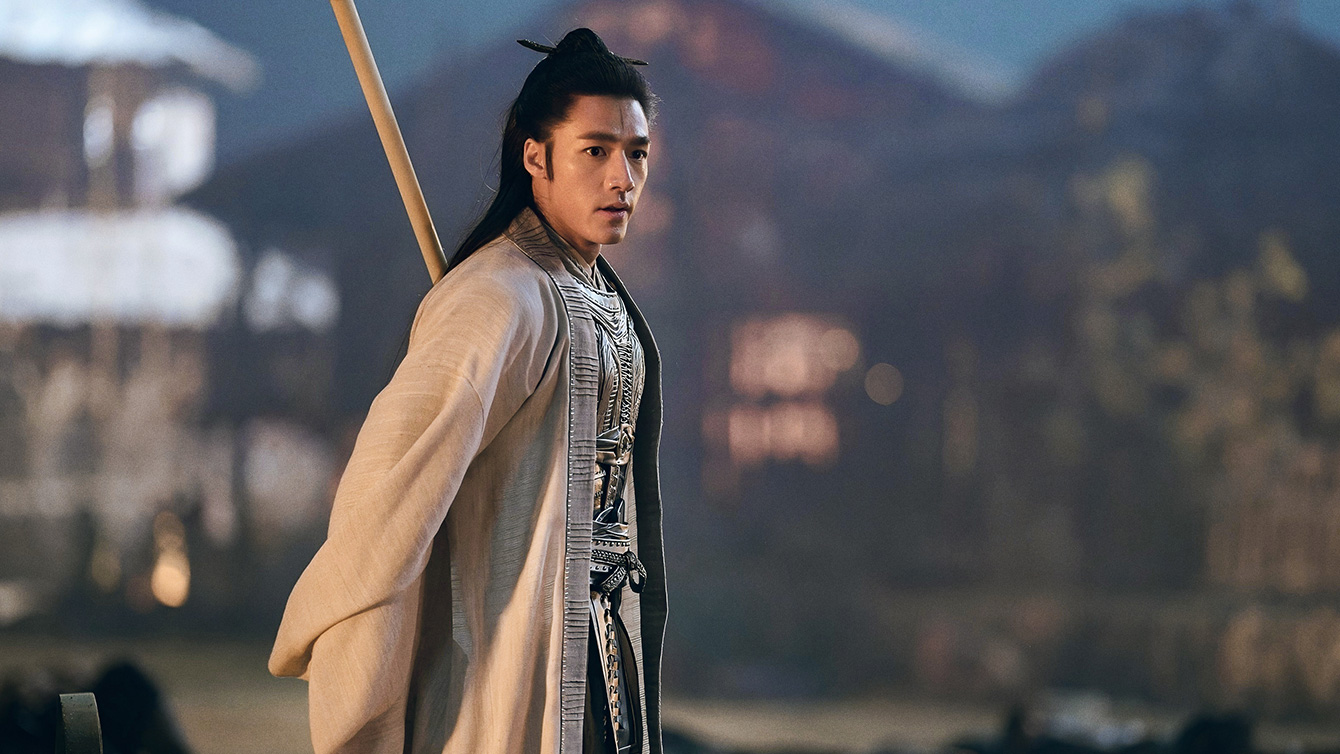 It should be noted that the film is not as fanciful in its directing as something like Tsui Hark’s Journey to the West: The Demons Strike Back for instance, which was a hysterical exploration of everything digital cinema could allow, a continuation of Tsui’s technological boundary-pushing projects like Zu: Warriors from the Magic Mountain. Wuershan does not try to push the envelope but seems rather hellbent on delivering the best that current imaging technologies can conjure up on the big screen. Less frantically stimulating on a purely compositional level than works from Ching Siu-tung for example, Wuershan’s direction is assured, purposeful, and classical in its attempts at creating a traditional and rock-solid blockbuster.
While his narrative is particularly intense this time around, the filmmaker still manages to indulge in little moments of human-level emotionality, such as the pre-climactic celebration scene (about two-thirds of the way in), which stands as one of the only moment of respite from the mythological turmoil that seems to have taken hold of the world, a world in constant struggle for its survival and rebirth from moral decay.
The orchestral score, which was sadly far too unremarkable the first time around, is more memorable, bombastic, and epic here, but is still missing an instantly recognizable theme that would elevate the project to the top tier of cinematic fantasy epics. The trilogy had originally been described as a “Chinese Lord of the Rings”, an early marketing shorthand that would apply well enough to Demon Force, at least in terms of scale and spectacle.
With Demon Force, Wuershan indeed stays the course, visually and kinetically surpassing expectations, delivering a fast-paced spectacle that embraces the diegetic richness of its source material. He only has to stick the landing next time to make the Creation of the Gods trilogy one of the best mythological epics in Chinese cinema.
Creation of the Gods II: Demon Force is opening in IMAX on January 29th, 2025, and everywhere else in the United States on January 31st. Thanks to Well Go USA for making this review possible.
Creation of the Gods II: Demon Force – Sortie en France le 26 février 2025
Directed by Wuershan
With Huang Bo, Yu Shi, Kris Phillips

 Film Exposure