The combined powers of Kenji Tanigaki and Kensuke Sonomura are synonymous with perpetual motion, an ability to command attention, stir up emotions, and provoke physical reactions in the audience.
All major action films have one thing in common: to make history, they must provoke and challenge the spectator’s disbelief; they must embrace a new aesthetic of astonishment. This was true of Buster Keaton’s films as well as Jackie Chan’s. This was true of the Thai paradigm shift in the 2000s, and also of the choreographic revolution spearheaded by Donnie Yen-starring films such as SPL and Flashpoint. At the time, Japanese stunt performer and choreographer Kenji Tanigaki had already started working with Yen – a collaboration that continues to this day – and his subsequent career would show his uncanny propensity for adaptability and reinvention. By bringing together forces that have defined the genre for the last two decades, The Furious set itself one simple mission: to be the ultimate action film.
Wang Wei is a mute Chinese illegal immigrant working as a handyman in Southeast Asia. One day, his daughter is kidnapped by child traffickers, forcing him into a violent quest to save her. Soon, he joins forces with Navin, a journalist looking for his wife. This simple premise allows for two things: to establish clear and primordial emotional stakes, and to set up a web of interactions that will lead to engaging shifting allegiances.
From the get-go, producer Bill Kong, whose extensive list of credits includes landmark films like Crouching Tiger, Hidden Dragon, set out to remind the world that martial arts action cinema can still take the world by storm. The man for the job was Kenji Tanigaki, who himself picked Kensuke Sonomura as action choreographer, whose credentials include recent successful and unique Japanese action films such as Hydra, Bad City, and the Baby Assassins saga. He also chose his lead actors and their associated special style of fighting: Xie Miao (kung fu), who starred alongside Jet Li as a child actor and has gone on to become an action icon himself in China through his collaborations with Qin Pengfei (Fight Against Evil 1 & 2, Blade of Fury, Eye For an Eye 1 & 2); Joe Taslim (judo), of The Raid and The Night Comes for Us fame; Joey Iwanaga (karate), who you might have seen in Rurouni Kenshin, HiGH&LOW, or Baby Assassins 2; Yayan Ruhian (silat), also from The Raid of course; and self-taught Martial Club prodigy Brian Le, whose unique style is… an otherworldly combination of raw power and near-superhuman speed and dexterity.
On a kinetic level, Kenji Tanigaki seems to have focused on emphasising his performers’ range of movements and on optimising the fight beats within each shot. The result contains a lot less cuts than his previous major work as action designer, Soi Cheang’s Twilight of the Warriors: Walled In, but without ever relying on empty, demonstrative shows of logistical prowess as can sometimes be the case with other filmmakers.
The action in The Furious contains things you’ve seen before, working as references that the knowing spectator (the fan of martial arts films) will recognize, and as a testament to the team’s acute awareness of this film’s place in the genre as a whole: the Jeeja Yanin back kick, the use of one’s hands to create diversion and the ground work of Kensuke Sonomura, the use of objects from the environment à la Jackie Chan (see: the ladder scene), or the way Xie Miao protects his daughter and even gives her the chance to help out in one action scene, as was the case when Xie played Jet Li’s son back in the 1990s.
The action in The Furious also contains things you’ve never seen before, working as vectors of innovation, as augmentations of previous ideas that attempt to forge a way forward for action design: Jeeja Yanin rolls, spins, jumps, weaves in and out of headlocks and in-between her opponents’ bodies; Xie Miao (has anyone ever moved like that on film?) literally stands on a growing stack of piled up bodies as the enemies keep coming; Joey Iwanaga kicks his way into action stardom and sometimes, it seems, even defies gravity; Brian Le surpasses all expectations of what a force of nature might look like on screen. The combined powers of Kenji Tanigaki and Kensuke Sonomura are synonymous with perpetual motion, an ability to command attention, stir up emotions, and provoke physical reactions in the audience. Even with the full body weight of an opponent on top of them, Xie Miao and Joe Taslim must keep going, snaking out of their predicament by moving in ways unattainable for most humans while never threatening the spectator’s immersion.
Success in action cinema depends on a film’s ability to offer striking corporeal displays of physical performance that shock or move the spectator into a state of awe. These performances create a spectacle of the body which, just like in musicals, is formed in the visual articulation of the performing body, its cinematographic manipulation, and the relationship between performer and knowing spectator. However, for innovation to emerge and take hold, the performance must become a virtuoso one, i.e. when some part of one’s performance or accomplishments exceed viewers’ expectations based on the artist’s past work and the work of their contemporaries.
Virtuoso performance depends on the precision of the execution, on the fresh ways in which forms are combined, and on how spectators engage with the material. The Furious offers all of that, and more: unrelenting action that makes one fight follow another in a continuous crescendo of violence anchored in primal emotions. Dance theorist John Martin articulated a theory that relied on two concepts he called “metakinesis” (communication through movement) and “muscular sympathy” (the phenomenological “feeling” associated with communication); tools which, when applied to dance, allowed for a careful study of the way physical movement on stage or on screen could foster the circulation of ideas and feelings between artist and spectator. The same can be said of action: because each performer in The Furious displays unique fighting characteristics they use to respond to various, unexpected situations in their own way, and because of how invested in the physical stakes one can become, the spectator can understand each main character in a deeper sense without the use of dialogues (is it really a surprise that Xie Miao’s protagonist is mute?). The story being told thus becomes almost purely visual and visceral, as should be the case in any self-respecting action film.
Like with all movies centred on body spectacle, one should ideally meet The Furious on its own terms. Is the choice of having dialogues in occasionally clunky English detrimental to its aesthetic and artistic goals? No. Is using too much digital blood in that Joey Iwanaga scene a problem? Yes. Are some music choices, especially in the final fight, bordering on annoying? Sadly, yes.
And yet, much will be said and written about the film’s climatic battle, a five-way fight in a police station that endeavours to take martial arts cinema to unexplored heights of awe-inspiring body spectacle, a new exploration of the terpsichorean staging of multiple-character fight choreography. Whether or not The Furious ends up being considered “the ultimate action film” is of no consequence: it does more (and with more combined expertise) than the vast majority of action movies and has, as such, already secured its spot in the genre’s history.
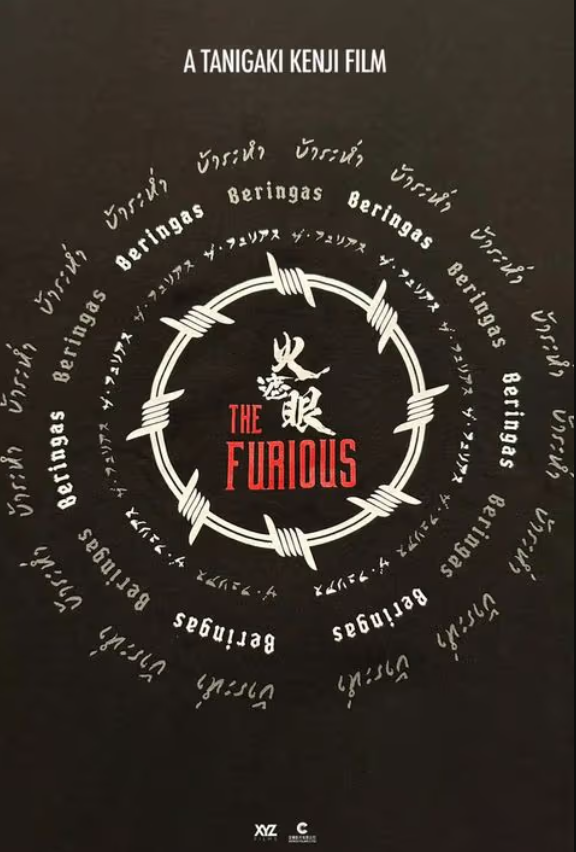
The Furious – World premiered at TIFF 50 on 6 Sept. 2025; no European release date yet Directed by Kenji Tanigaki With Xie Miao, Joe Taslim, Joey Iwanaga, Brian Le, Yayan Ruhian
For further reading on body spectacle in action cinema, see Lauren Steimer’s Experts in Action: Transnational Hong Kong-style Stunt Work and Performance, Duke University Press, 2021.



 Film Exposure