English
FF 2025: ROAD TO VENDETTA – Action is a Flat Circle
Feels like the work of a diligent student who tries to imitate his idols.
 Film Exposure
Site consacré au cinéma proposant des articles de fond et documentés.
Feels like the work of a diligent student who tries to imitate his idols.
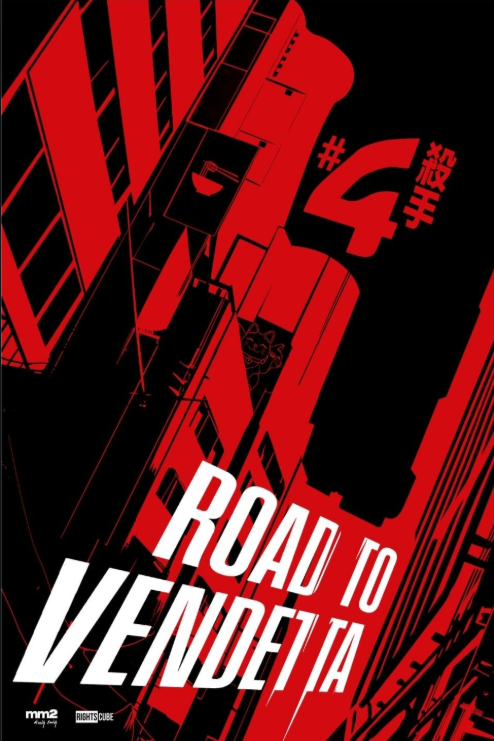
The atmosphere, the crisp and colourful cinematography, and the cool music immediately pull you in. A few seconds later, a fight breaks out at the top of a double decker Hong Kong bus. In just a few minutes, the film has already invoked a galaxy of influences most action fans are very familiar with. A little bit of Johnnie To, a little bit of Jackie Chan, some John Wick, and even a dash of Takashi Miike – it’s hard not to be swooning at Road to Vendetta’s aesthetics. But if this opening scene leaves no room for doubt as to what first-time director Albert Njo Kui-ying has in mind, the action it contains poses questions about the robustness of the execution.
Road to Vendetta is marketed as an all-out action film but that is slightly deceiving. The film contains only a handful of action sequences, and none of them manage to rise above the competition. Those scenes rely mostly on gunfights with a little bit of hand-to-hand combat thrown in, and there are some good ideas peppered throughout for sure. One, for instance, is to film an action scene by casting the characters’ shadows on shoji-like screens for a very cinematic, visually pleasing result. Not as good as in Brutal Tales of Chivalry 2 (Kiyoshi Saeki, 1966) however, which toyed more with the performers’ positions to stimulate the viewer’s cognitive involvement. The shootout in the arcade is very reminiscent of the one in Joe Cheung’s True Hero (1994), which did more to integrate the environment in the action design.
That is not to say the action in Road to Vendetta never hits; it does, sometimes. Overall, it feels like the work of a diligent student who tries to imitate his idols without really bringing anything noteworthy to the table. The choreographies are fine, the gunfights mostly legible, and the editing too tight too often, not allowing all punches to land properly, cutting on impact a few too many times. It lacks the dynamism (in framing, rhythm, editing) Hong Kong action films became known for in the 80s and 90s. If you were expecting a balls-to-the-wall action extravaganza, your expectations will need to be adjusted.
Where the film scores points, however, is in its characters and their interactions. Number 4, the protagonist, is a Hong Kong assassin sent to Japan for a contract. He soon meets the person who hired him, a Japanese woman named Kumo, who hangs out with a young boy she calls Boss. If the revenge story that unfolds remains rather standard, the language barrier between the characters allows for good development, and more than few moments of heartwarming humour. Misunderstandings become puns which become vectors of shared experience bringing these people closer to one another.
The worldbuilding works fine, calling to mind that of John Wick’s, Baby Assassins’ or even Kingman’s (the guild, the shops working as fronts for buying weapons, the rules), while the villains take on a rather cartoonish turn in the way they are written, which does not seem too out of place however given the film’s style and approach. It sometimes tries a little too hard to look cool when a more serious tone could have benefited the narrative, but the chemistry between the actors makes it an easy watch.
Road to Vendetta likely won’t end up on anyone’s Top 5 action movie lists, but it’s an encouraging calling card for director Njo Kui-ying, who certainly has an eye for good visuals and just needs to hone his skills on kinetic action filmmaking. It’s interesting though, how the genre tends to go full circle across eras. Hong Kong actioners twice revolutionised American cinema. Maybe it’ll happen again someday, and maybe Njo will have a hand in it.
Road to Vendetta – World premiered at Fantastic Fest 2025; no European release date yet
Directed by Njo Kui-ying
With Jeffrey Ngai, Sara Minami, Chu Pak-him

 Film Exposure