English
FF 2025 – PENANCE: Action ex nihilo
For a little while there, it feels like Penance will be unstoppable, the perfect avatar of the heights micro-budget actioners can reach.
 Film Exposure
Site consacré au cinéma proposant des articles de fond et documentés.
For a little while there, it feels like Penance will be unstoppable, the perfect avatar of the heights micro-budget actioners can reach.
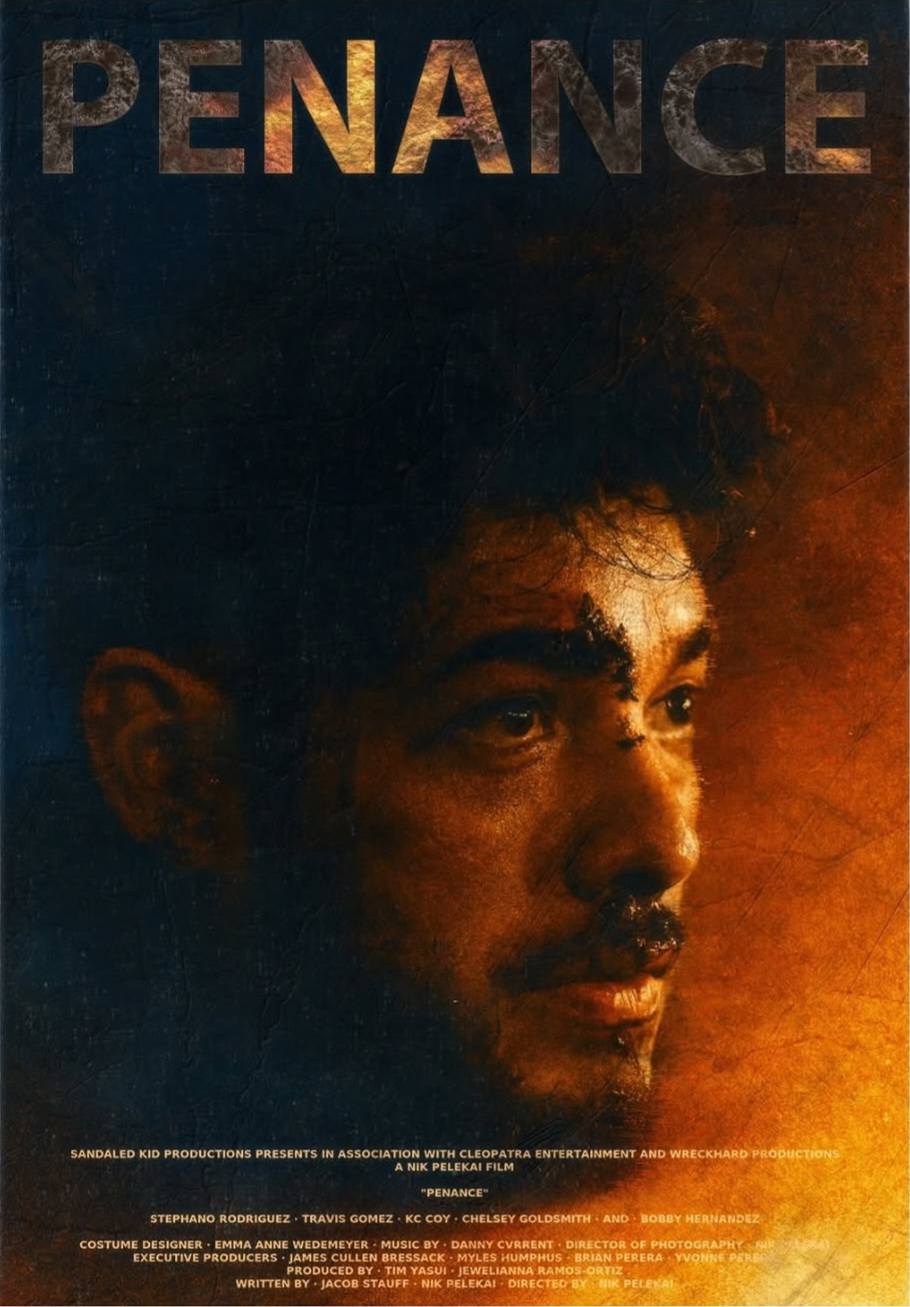
Micro-budget filmmaking can be a thing of wonder. It’s a space where nothing seems possible, yet where anything can be done. Cinephiles usually have seen their fair share of micro-budget indie dramas, but to think some genres might be unsuitable for such a formal approach by virtue of their technical requirements would be a mistake: if anything, the space is where expert craftsmen can deliver their purest work free of all creative constraints. Judging from stunt coordinator and action designer Nik Pelekai’s directorial debut Penance, this might well be what the filmmaker tried to accomplish here: summon cinematic kineticism with close to no resources – create action ex nihilo.
Penance opens on a 9-minute action scene that outclasses a lot of action movies. Two men we understand are brothers (we’ll later learn their names: Stephano and Travis) break into a warehouse and start killing their way through a myriad enemies. Bodies bump and roll all over their speeding car, bones break in unison under unrelenting assaults, the driver takes out the steering wheel to use it as a weapon (!), a crowbar is shoved into someone’s ass (!!), and then… it just goes on, with a dizzying oner set in a corridor, that goes back and forth through whip pans between the two brothers, each handling their own group of opponents. It’s a raw symphony of carnage that runs on pure energy. For all nine exhilarating minutes of this scene, it feels like Penance will be unstoppable, the perfect avatar of the heights micro-budget actioners can reach.
I keep mentioning the budget, so let’s talk numbers: director Nik Pelekai (whose credits as stunt professional include blockbusters such as Captain America, Bad Boys, and Superman) confirmed they had a budget of 7,000 dollars (yes, seven thousand), and shot the entire film in about 24 days, while juggling everyone’s schedule as the crew was also working on larger scale projects at the same time. It was a crew of mostly stuntpeople that the filmmaker has been working with for a while, which allowed them to only do minimal previz of the opening scene, and no previz for the other fights.
It’s immediately pretty obvious that there was no money, and that is by definition part and parcel of micro-budget filmmaking, but there are some technical weaknesses that are more problematic than others. Ambition is never a bad thing but knowing how far such a narrative can be stretched on such a budget is also important: Penance is too long, offering little to the audience between the opening scene and the third act. The plot and the narrative structure that alternates between the brothers and a duo of police officers are very reminiscent of some horror films that revel in the tension and the kills (Penance even spends a little time on scenes of torture) but stumble in connecting scenes, with police investigations that seem to come out of obscure Poliziotteschi. Pelekai does seem to be aware of that to some extent, and often tries to eschew long dialogues, opting for visual storytelling, while sometimes using elliptic editing with smart transitions to try and speed things up a bit. That is not consistent, however, as other scenes seem to go on for far too long, adding nothing of note to the narrative (the dialogue scene in the parking garage between the two cops, for instance).
I would be remiss not to mention the sound mix, which is where more budget would have been welcome, and where more work can still be done (the version shown at Fantastic Fest 2025 might not be final) as voice levels keep shifting, and the absence of post-production work on dialogues hurts the viewer’s immersion. That is not to say the team did not pay attention to the audio: in all action scenes, the sound design revels in the deep sounds of the bass, the score almost merging with the foley as punches become rhythmic beats and voices are drowned out by the ambient noise that exists as continuation of the kinetic mayhem. The sound design – just like the whole diegesis itself – seems to come alive in the action. Could it be that this world only truly exists in those moments of unbridled violence?
There are surprising elements of the slasher genre in the final fight, with the protagonist prowling around his opponent in a predator-like fashion, suddenly emerging from the shadows to fight some more, closing the door behind him as would a knife-wielding serial killer. This is a brilliant idea, executed well enough here, but which Pelekai can certainly revisit later down the line to flesh it out some more. The final moments of the final fight do interesting things with the actors within the frame, but it would be difficult to elaborate without spoiling it.
The hard-hitting work of stunt coordinator Myles Humphus (Dwayne Johnson’s regular stunt double) and the two fight choreographers (our two lead actors) is perfectly showcased by Pelekai’s filmmaking choices, either opting for unusual but dynamic angles, or for a handheld camera that immerses the spectator without ever making it hard to follow. And since the director shoots with the edit in mind, it never feels like anything is ever out of place.
The film undoubtedly needs more work (sound needs polishing, quite a few scenes would need trimming), but yes, micro-budget filmmaking can indeed be a thing of wonder, and for all its shortcomings, Penance sporadically becomes a testament to the fact that you can create mesmerizing action out of practically nothing. Soldier on; we’ll keep watching.
Penance – World premiered at Fantastic Fest 2025; no European release date yet
Directed by Nik Pelekai
With Stephano Rodriguez, Travis Gomez, KC Coy

 Film Exposure