English
Alienoid: Return to the Future – Bringing it All Together
14th century sorcerers and futuristic robots team-up against aliens.
 Film Exposure
Site consacré au cinéma proposant des articles de fond et documentés.
14th century sorcerers and futuristic robots team-up against aliens.

Remember, it was less than two years ago that director Choi Dong-hoon unleashed the first part of his Korean period swordsman sci-fi blockbuster on our screens, and I liked it quite a bit. The ambition, the scale, the generosity, the willingness to give, give, give in that tradition of grandiose pulpy adventures, and of course the craftsmanship to back it up – it was all there, with a few flaws of course, but vividly present. The film’s biggest drawback? Its cliffhanger of course, making it one half of a cinematic experience, an incomplete journey through time. And so here we are again, finally, on the threshold of imminent apocalypse, simultaneously a few minutes close to the end and six centuries away from it.
Return to the Future starts out in a somewhat didactic way, for it takes a few minutes to sum up the events of the first film. It has to. Not everyone will rewatch it; hell, not everyone will have even seen it before watching this one. The same feeling that closed out Alienoid opens its second part: there is something missing. I hadn’t rewatched it recently and I felt like I should have. This is absolutely one film in two parts, not two films one could enjoy separately. On a personal note, I would not have minded a single 4.5-hour film. This division turns out to be a disadvantage, robbing part 1 of its conclusion, and part 2 of its emotional build-up.
Ean, who arrived in the 14th century ten years ago, is now a young woman fighting to find an artifact that can get her back to her own time, where a bunch of aliens are trying to terraform the planet and destroy humanity in the process. This second instalment moves at breakneck pace, re-introducing characters we are familiar with and fleshing out others that were barely an afterthought two years ago. Adventures abound and small skirmishes multiply, but the overall plot stays crystal clear throughout: get back to the future to stop the aliens from turning Earth into their new home. Here lies the interesting dichotomy with the first film, namely an inversion on the fish and the water – as Ean and a couple of aliens travelled from the 21st century into the past, here we are presented with a struggle to make the return journey, bringing sorcerers from yesteryear into our world. We thus go from being amused by the use of guns in medieval Korea to geeking out seeing wuxia-like tropes in a modern environment. Not that it’s never been done before in Hong Kong cinema, but it certainly is not a common sight in the Korean industry.
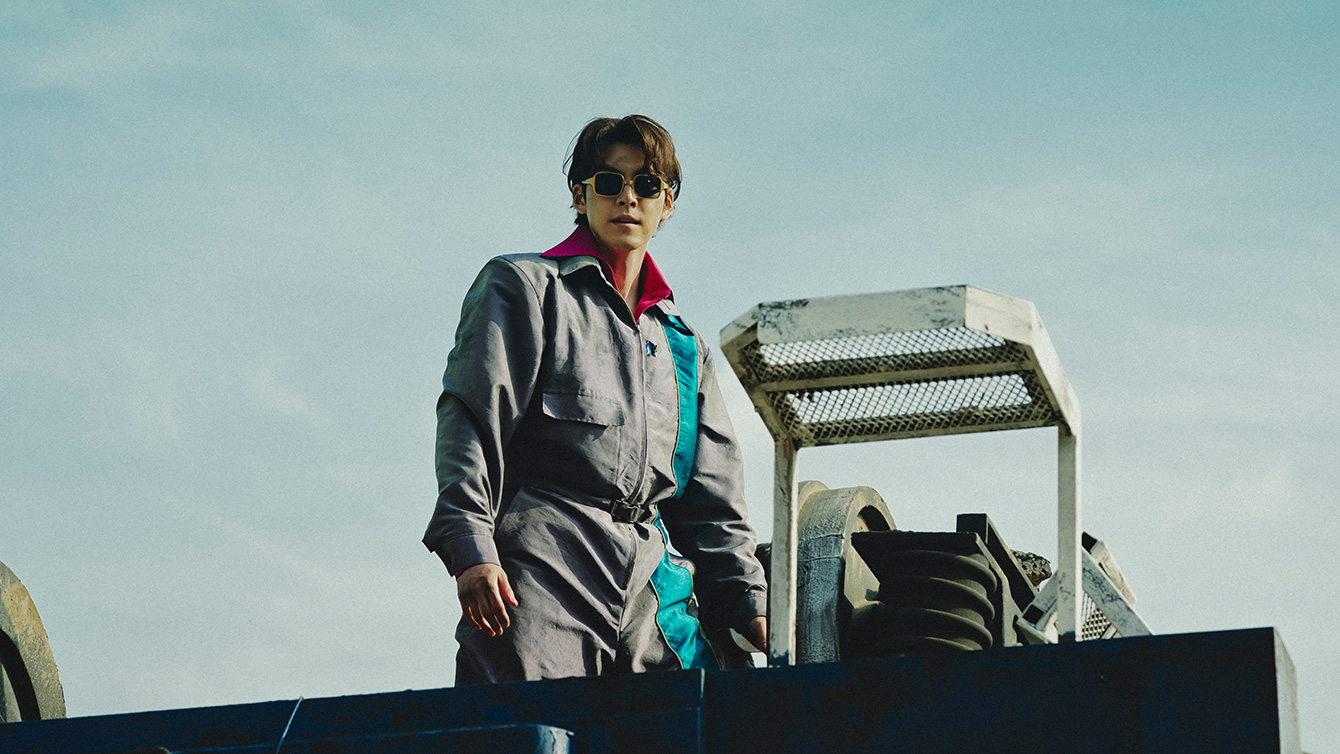
Choi is a talented scriptwriter, able to infuse a flow into his dialogues and scenes that hooks the audience and never really lets them go. Touches of humour (mainly from the couple of sorcerers, as was the case before) and heartfelt emotional moments (especially toward the end) give the story a tangible, credible feel that many blockbusters tend to lack. The plot is a amalgamation of colourful sci-fi and fantasy tropes that don’t necessarily have much to say in substance, but the characters that inhabit this world are always believable and touching enough to make us willing participants in the journey rather than merely passive observers.
There is a moment in the film, around the midway point, when I felt perhaps the narrative was starting to walk in circles a little bit; of course, it only took a few seconds after that for Choi to start unfolding its playful twists that turn some of the audience’s expectations on their heads… for those who have seen the first film, that is. Potential threats become confirmed allies, heroes switch sides against their will, and the overall dynamic changes just in time for the climactic battle.
While the ensemble cast deliver solid performances (Kim Tae-ri shines like never before; Kim Woo-bin, unfortunately a lot less present than in the first part, keeps stealing the scenes he’s in), the main draw is, after all, the action. Return to the Future only has a few moments of action before its final act, which thankfully takes us on a rollercoaster ride of imaginative battles through time with strong visual effects (the best ever in Korea?) to boot. You’ll know things are getting serious when that guitar riff finally makes its return. The climax is quite generously long, and while it does contain memorable scenes – in particular a foot chase in and on a train – none really match the raw power and brutality of the fight between Guard and the alien robot from the first film. It is a bit surprising that Choi made the choice not to expand his world beyond the locations already presented in 2022, as the recurring circling back to familiar places give a certain sense of restriction. In any case, the final showdown should rank amongst the year’s coolest team-up fights.

It is a commendable endeavour to bring together so many genre tropes and make them work together so well. Above all, I was struck by the fact that Choi leans heavily on the time travel mechanism without ever abusing it. The script carefully avoids all potential paradoxes by presenting an eternalist approach to the concept which, by the way, allows Choi to add some last-minute surprises in an unexpected yet logical way. Yet another proof that the filmmaker’s intent is never to dabble in mind games, but to extract maximum entertainment from his chosen tools.
Alienoid: Return to the Future is a cinematic ride to be experienced on the big screen if possible, but preferably after watching or revisiting its first part, which is essential to make the most of the film – a relentless, charming, exciting throwback to old-school spectacular escapism that strives to take Korean cinema to new visual realms.
The film opens in select US theatres on January 26th, 2024. Thanks to Sarah Clinton from Well Go USA for making this review possible.
Alienoid: Return to the Future – No European release date yet
Directed by Choi Dong-hoon
With Kim Woo-bin, Kim Tae-ri, Ryu Jun-yeol

 Film Exposure